How to Stop Negative Thought Spirals Before They Take Over
Mar 26, 2026A negative thought spiral can start with one small spark. A text goes unanswered, you make a mistake, or your chest tightens for no clear reason. Then your mind starts stacking fear on top of fear, until one thought becomes ten.
If that happens to you, you're not broken, and you’re not alone in it. Negative thought spirals feel powerful because thoughts, feelings, and body stress feed each other. The more stressed your body gets, the worse your thoughts sound. Then those thoughts make your body react even more. The good news is that you can break that loop. This guide will help you spot a spiral early, calm it in the moment, and build habits that make it less likely to come back.
If your thoughts tend to spiral like this, there’s a simple way to start interrupting the pattern.
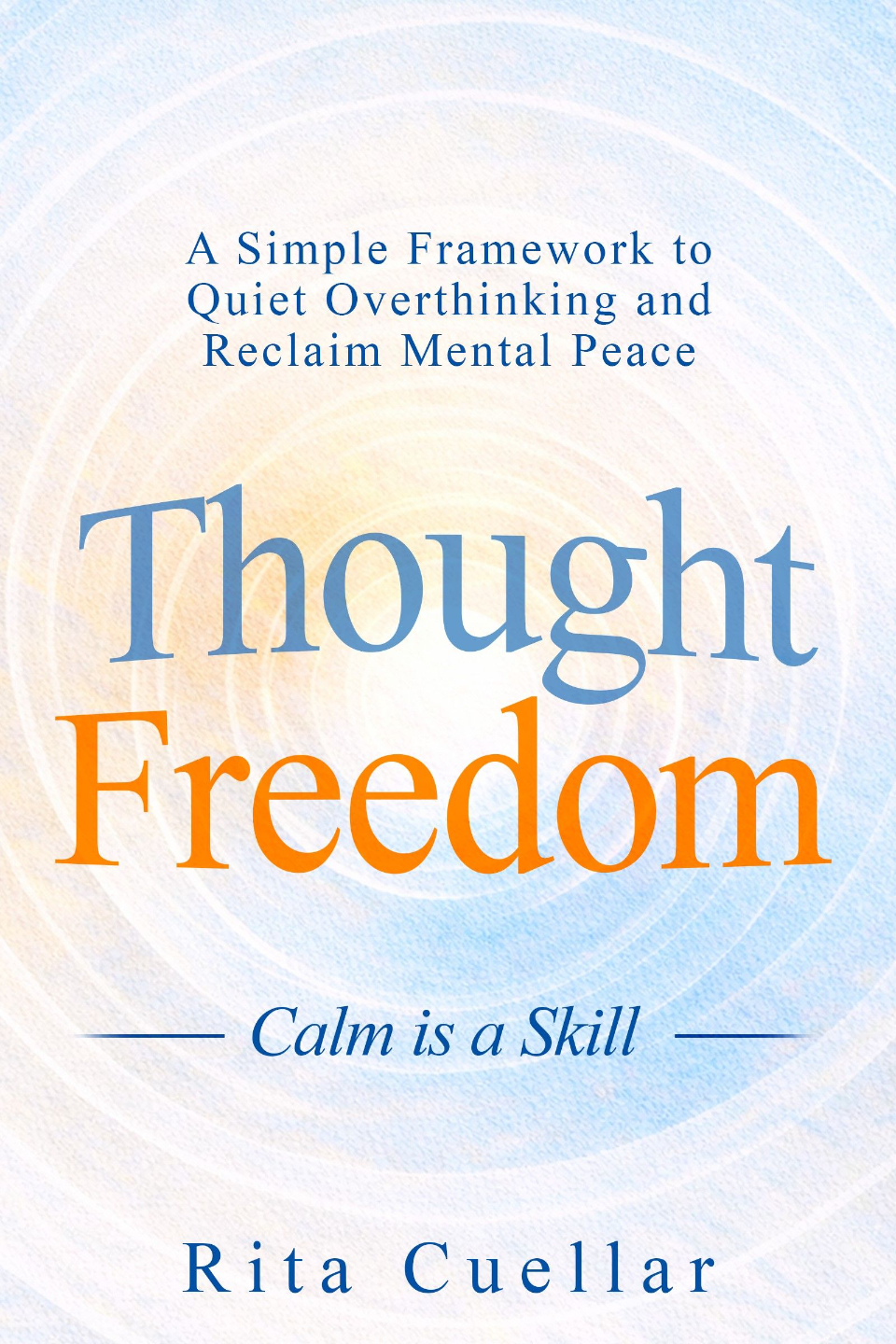
I created a short 7-day reset that walks you through how to calm your mind, break the loop, and feel steadier, day by day.
👉 You can start the reset here
Spot a negative thought spiral before it gains speed
The earlier you catch a spiral, the easier it is to stop. Once your mind is racing and your body is on high alert, everything feels more urgent and more believable.
Common early signs look simple at first. You replay the same thought. You jump to the worst-case outcome. You treat a single comment as proof that something is deeply wrong. You can't focus. Your chest feels tight. Your heart speeds up. You want to hide, cancel plans, or ask the same question for reassurance again and again.

That pattern is often called rumination, getting stuck in a loop of repetitive, distressing thoughts. If you want a plain-language overview, this guide on how rumination affects mental health explains why loops can feel so sticky.
Know the difference between problem-solving and rumination
Problem-solving moves you forward. Rumination keeps you pacing in place.
For example, problem-solving might sound like: "I missed a deadline, so I'll email my manager, explain it, and make a plan." Rumination sounds like, "I missed one deadline, so I'm failing, people must be disappointed, and I'll probably mess up again."
One creates action. The other creates exhaustion.
If your thinking leads to a next step, it's probably problem-solving. If it only makes you feel worse, it's probably rumination.
Learn your personal triggers and early body cues
Most spirals don't come out of nowhere. Stress, bad sleep, conflict, social media, too much caffeine, and long stretches of uncertainty often set the stage. As of March 2026, mental health trend data in the US still points to uncertainty, money stress, and too much online pressure as common drivers of anxiety loops.
Your body often notices before your mind does. Maybe your shoulders rise. Your jaw clenches. Your breathing gets shallow. You feel a drop in your stomach, like an elevator suddenly falling. When you learn those signals, you can step in earlier.
Use quick tools to interrupt the spiral in the moment
These are the same types of tools you’ll start practicing inside the 7-Day Overthinking Reset.
When a spiral starts, your first job is not to force a positive thought. That usually backfires. Instead, create a little space. That space is often all you need to stop the spiral from building. You want enough calm to stop the loop from running the whole show.
Ground your mind with the 5-4-3-2-1 method
This method works because it pulls your attention out of your head and back into the room around you. A simple walkthrough of the 5-4-3-2-1 grounding technique can help if you want more detail.
Try it slowly:
- 5 things you can see
- 4 things you can feel
- 3 things you can hear
- 2 things you can smell
- 1 thing you can taste

Don't rush it. Notice color, texture, temperature, and sound. The goal is simple: return to the present.
Create distance by saying, "I'm having the thought that..."
This small wording shift can make a big difference. Instead of saying, "I'm going to fail," say, "I'm having the thought that I'm going to fail."
That sentence doesn't deny fear. It just labels the thought as a mental event, not a fact. This helps you step back from the story rather than fall into it.
Calm your body first with slower breathing
A stressed body can make ordinary thoughts sound like emergencies. So, calm your body first.
Breathe in for four. Then breathe out for six. Repeat that for one or two minutes. Longer exhales tend to calm the nervous system, making it easier to think clearly. Keep it loose. You're not trying to breathe perfectly. You're giving your body a signal that danger isn't here right now.
Challenge the story your mind is telling you
Once you've slowed the spiral, you can look at the thought itself. Many spirals grow from thinking traps, not facts.
Ask, "Is this a fact, or is this a feeling?"
This question cuts through a lot of noise. A feeling is real, but it isn't always proof.
If you think, "My friend sounded short, so they're mad at me," pause. Do you know that for a fact? Or are you mind-reading? If you think, "One bad meeting means my career is falling apart," that's likely catastrophizing. If you think, "I always ruin things," that's all-or-nothing thinking.
A balanced response might sound like this: "I feel anxious because that meeting went badly. Still, one meeting doesn't define everything."
This style of reframing comes from CBT. If you want more examples, these practical CBT techniques show how to catch, check, and shift negative thoughts.
Use the best-friend test to talk to yourself with more care
Spirals often turn your inner voice harsh. You say things to yourself that you'd never say to someone you love.
Try the best-friend test. Take one painful thought, like "I'm such an idiot," and rewrite it the way you'd speak to a close friend: "You made a mistake, but that doesn't define you. You're stressed, and you can fix the next step."
That isn't soft or fake. It's more honest.
Try the 5-5-5 rule to zoom out
When your mind acts like everything is urgent, zoom out. Ask yourself what this will mean in 5 minutes, 5 days, and 5 weeks.
In 5 minutes, it may feel huge. In 5 days, you may still care, but less. In 5 weeks, it may be a lesson instead of a threat. Perspective doesn't erase pain, but it often shrinks false alarm signals.
Build daily habits that make thought spirals less likely
Stopping a spiral in the moment matters. Preventing the next one matters too. Small habits often help more than a perfect routine that never lasts.
As of March 2026, researchers are still studying the brain side of rumination, including attention and learning patterns. Yet the most practical first steps remain the basics: notice triggers, name thoughts, move your body, sleep better, and talk to someone when needed.
Name feelings early, so they don't build into a loop
Feelings that stay vague often grow louder. Naming them can lower their intensity.
Try simple labels: "I'm embarrassed." "I'm scared." "I'm overwhelmed." "I'm lonely." That sounds almost too easy, but giving a feeling a name helps your brain organize it rather than spinning it around.
Cut common spiral triggers, especially before bed
Late-night spirals hit harder because you're tired, alone with your thoughts, and more likely to believe them. So, lower the odds.
Reduce caffeine if it makes your body buzzy. Cut back on doomscrolling. Keep your bedroom boring in the best way. Even a calmer evening routine can help. This recent piece on how to stop spiraling shares a few realistic ideas if you want more support.

Use short journaling and movement to reset your mind
You don't need three pages and perfect insight. Write for five minutes. Note what happened, what you thought, what you felt, and what came next. Over time, patterns show up.
Then move a little. Take a short walk. Stretch. Clean the kitchen while music plays. Action helps because rumination traps energy. Movement gives it somewhere to go.
Know when to get extra support, and what kind can help
If spirals keep coming back, that is not a personal failure. Sometimes the loop is too strong to handle alone, especially when it starts to affect sleep, work, relationships, or daily life.
Therapies that can help break the cycle
CBT is often a strong first choice because it helps you spot thinking traps and build better responses. DBT can help if emotions feel intense and hard to regulate. If fear loops come with compulsions, ERP may help you break that pattern.
Newer brain-based treatments are being studied, especially for rumination. Still, for most people, talk therapy and daily coping skills remain the most useful place to start. This overview of therapy for overthinking and rumination gives a helpful snapshot of current options.
Signs it's time to talk with a mental health professional
Reach out if spirals happen often, bring panic-like symptoms, keep you stuck for weeks, or push you to avoid normal life. Also, get help if your sleep falls apart, your work suffers, or your relationships start revolving around reassurance and fear.
If you have thoughts of self-harm, seek immediate support through a crisis line, 911, or the nearest emergency room. You deserve real help, right away.
Conclusion
Stopping a spiral isn’t about having a perfect mindset. It’s a skill, and like any skill, it gets stronger with practice.
Start with one tool today. Maybe slow your breathing. Ground yourself. Or simply notice the spiral a little sooner than you did last time.
And if you want a simple, structured way to practice this every day, the 7-Day Overthinking Reset will walk you through it step by step.
If overthinking has been running in the background of your day, you don’t need more information—you need a way to interrupt the pattern.
The 7-Day Overthinking Reset gives you simple, daily steps to help you catch the loop, create space, and feel calmer—without trying to force your mind to be quiet.
Get Calm, Clear, and Out of Your Head
Simple tools and insights to help you break the overthinking loop—sent straight to your inbox.
Don't worry, your information will not be shared.
We hate SPAM. We will never sell your information, for any reason.