How to Stop Overthinking Every Decision, Even Small Ones
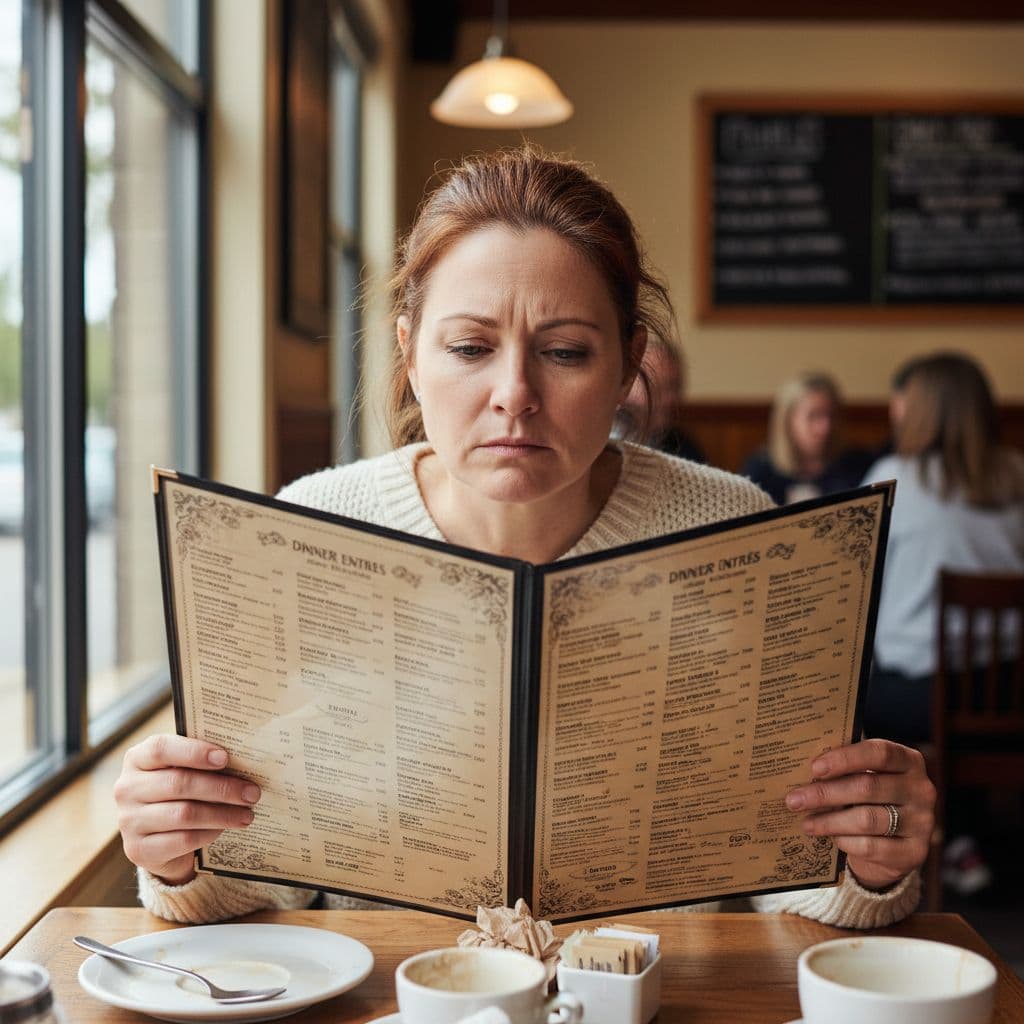
Mar 29, 2026You open a menu, read it three times, and still can't pick lunch. Or you type a text, delete it, rewrite it, then stare at it like it might ruin your day. That's what overthinking every decision feels like—a loop of doubt, fear, and delay.
Small choices drain you because they start to feel loaded with risk. Your brain treats a sandwich, an email, or a plan for Saturday like it needs a perfect answer. The good news is that you don't need more mental force. You need a calmer, simpler way to decide.
What overthinking is really doing to your decisions
Careful thinking helps you move forward. Overthinking keeps you stuck.
That difference matters. Healthy thinking gathers what you need, weighs a few options, and lands somewhere. Overthinking keeps circling the same point. You second-guess, ask five people for input, read twelve reviews, and still feel less sure than when you started.
Recent 2026 reporting on decision fatigue points in the same direction. Repeated choices wear down mental energy, so even simple calls start to feel harder over time. This overview of decision fatigue explains why too many decisions can leave you slower, more stressed, and less clear.
The common traps that keep you stuck
Most overthinking is not a sign that you're thoughtful. It's a sign that fear has taken the wheel.
Maybe you fear making the wrong choice. Maybe you want the best option, not a good one. Sometimes the real worry is regret. You don't want to look back and think, "I should've picked differently."
Too many options make all of this worse. That's the plain-English version of the paradox of choice. More options can feel freeing at first, but they often raise pressure, increase doubt, and make you less happy with what you choose.
Then there's the need for certainty. You tell yourself you'll decide when you know enough. Yet for most daily choices, that moment never comes. So, the decision stays open, and your mind keeps spending energy on it.
How to tell when thinking has stopped being helpful
Helpful thinking adds clarity. Overthinking adds noise.
A few signs usually show up fast. You're reading the same reviews again. You're asking the same question in different ways. You're doing more research, but feeling more confused. You're delaying a simple choice for hours, or even days.
If more thought isn't giving you a clearer next move, it's probably not helping anymore.
That's the point to notice. You do not need to stop caring. You only need to stop treating every choice like a final exam.
Use a simple decision process so small choices stop taking over your day
Small decisions need a small process. If your method is too long, your brain will turn a five-minute issue into a half-day event.
A simple structure works because it cuts off the loop before it grows. You stop chasing the perfect answer and start making good-enough calls that protect your energy.
Set a short time limit, then choose
A timer works because it gives your thoughts a finish line. Without one, your mind keeps looking for one more detail, one more opinion, one more reason to wait.
For low-stakes choices, give yourself 30 seconds. For routine tasks, aim for 2 to 5 minutes. That could mean picking lunch, replying to a text, choosing an outfit, or deciding when to start a task.

The key is simple: set the deadline before you start searching for the perfect answer. That turns deciding into a task with edges, not a fog that follows you all morning.
One practical piece from this guide on how to stop overthinking your decisions is worth keeping in mind: waiting for total certainty often looks wise, but it can become delay in disguise.
Shrink the choice to one simple standard
When your brain sees ten factors, it freezes. When it sees one rule, it moves.
Pick one standard for the decision in front of you. Maybe today's filter is cheapest. Maybe it's healthiest, fastest, easiest, or good enough for today. One clear rule cuts overload fast.
If you're ordering lunch, choose based on speed. If you're picking a workout, choose the one you'll do for 20 minutes. If you're deciding what to wear, pick the option that fits the weather and the day. Done.
This doesn't mean every factor stops mattering. It means you're choosing one factor to lead, so the others don't all shout at once.
Treat most small decisions as reversible
Many small choices are not permanent. You can wear something else tomorrow. You can order a different meal next time. You can revise a draft after you start it.
That's why the "two-door" idea helps. If a decision is easy to change later, decide faster now. Save your long thinking for choices that are costly to undo.
This is also where the 40 to 70 percent rule helps. You do not need full certainty to act. For most daily choices, partial information is plenty. Past that point, extra thinking rarely brings extra value. It mostly brings tension.
Calm the fear that makes every decision feel bigger than it is
Overthinking often appears to be a thinking problem—but it's usually a fear problem.
Fear of regret, fear of judgment, fear of wasting time, fear of choosing badly, they all make small choices feel heavy. So, the goal isn't to become fearless. It's to stop fear from quietly running the whole process.
Name the fear before it runs the show
Fear gets stronger when it stays vague. It gets smaller when you put it into plain words.
Try one sentence: "I'm scared I'll regret this." Or, "I'm scared this choice will make me look careless." That's enough. You don't need a full journal entry. You need honesty.

This step works because it separates the fear from the choice. You're no longer drowning in a vague feeling. You're looking at one clear concern. That makes it easier to answer.
For more on why the mind keeps replaying things, this piece on why your brain won't quit offers useful context in plain language.
Ask, what if it goes right, not just what if it goes wrong
Overthinkers are often skilled at spotting risk. The trouble is that the brain starts acting like risk is the only truth.
A recent 2026 summary of research on dread found that people feel possible losses far more strongly than equal gains. So, if every thought leans toward what could go wrong, your decisions will feel dangerous by default.
Balance the picture. Ask, "What if this works out fine?" Or, "What if this turns out easier than I think?" This isn't wishful thinking. It's a correction. You're giving your mind a fuller view.
Replace perfect with good enough and move
Perfection is expensive. It costs time, focus, and peace.
Most decisions do not need the best possible choice. They need a decent choice, made on time, so life can keep moving. Good-enough decisions protect your energy for what matters more.
Action often teaches faster than extra thinking.
Once you choose, practice not reopening the case. That habit matters as much as the decision itself.
Handle bigger decisions without freezing up
Some choices do deserve more thought. Jobs, moves, money, relationships, and major commitments carry more weight. Still, even big decisions don't improve when you stay stuck.
A calm framework helps because it breaks the pressure into smaller pieces.
Gather enough information, then stop
Big decisions need facts, but they don't need endless research. Decide in advance what information matters most. Then collect that, not everything.
The plain version of the 40 to 70 rule works well here. Less than that can be too thin. More than that often turns into delay. A recent Frontiers review on decision fatigue also points to overload, time pressure, and stress as major reasons choices get worse, not better.
Choose a next step, not your whole future
A big decision often feels crushing because you think it has to solve the next five years. Usually, it doesn't.
Maybe the next step is applying, booking, asking, testing, or trying. That's enough. You are not choosing your entire future in one breath. You are choosing the next move that gives you more real information.
You don’t need to make perfect decisions to move forward.
If even small choices have been draining your energy, it’s not because you’re bad at deciding—it’s because your mind is stuck in a loop it was never taught how to break.
The good news is, this is something you can train.
Join the 7-Day Overthinking Reset and learn how to calm your mind, make decisions with more clarity, and finally stop second-guessing everything.
You don’t need perfect answers, you just need a better way to move forward.
If overthinking has been running in the background of your day, you don’t need more information—you need a way to interrupt the pattern.
The 7-Day Overthinking Reset gives you simple, daily steps to help you catch the loop, create space, and feel calmer—without trying to force your mind to be quiet.
Get Calm, Clear, and Out of Your Head
Simple tools and insights to help you break the overthinking loop—sent straight to your inbox.
Don't worry, your information will not be shared.
We hate SPAM. We will never sell your information, for any reason.