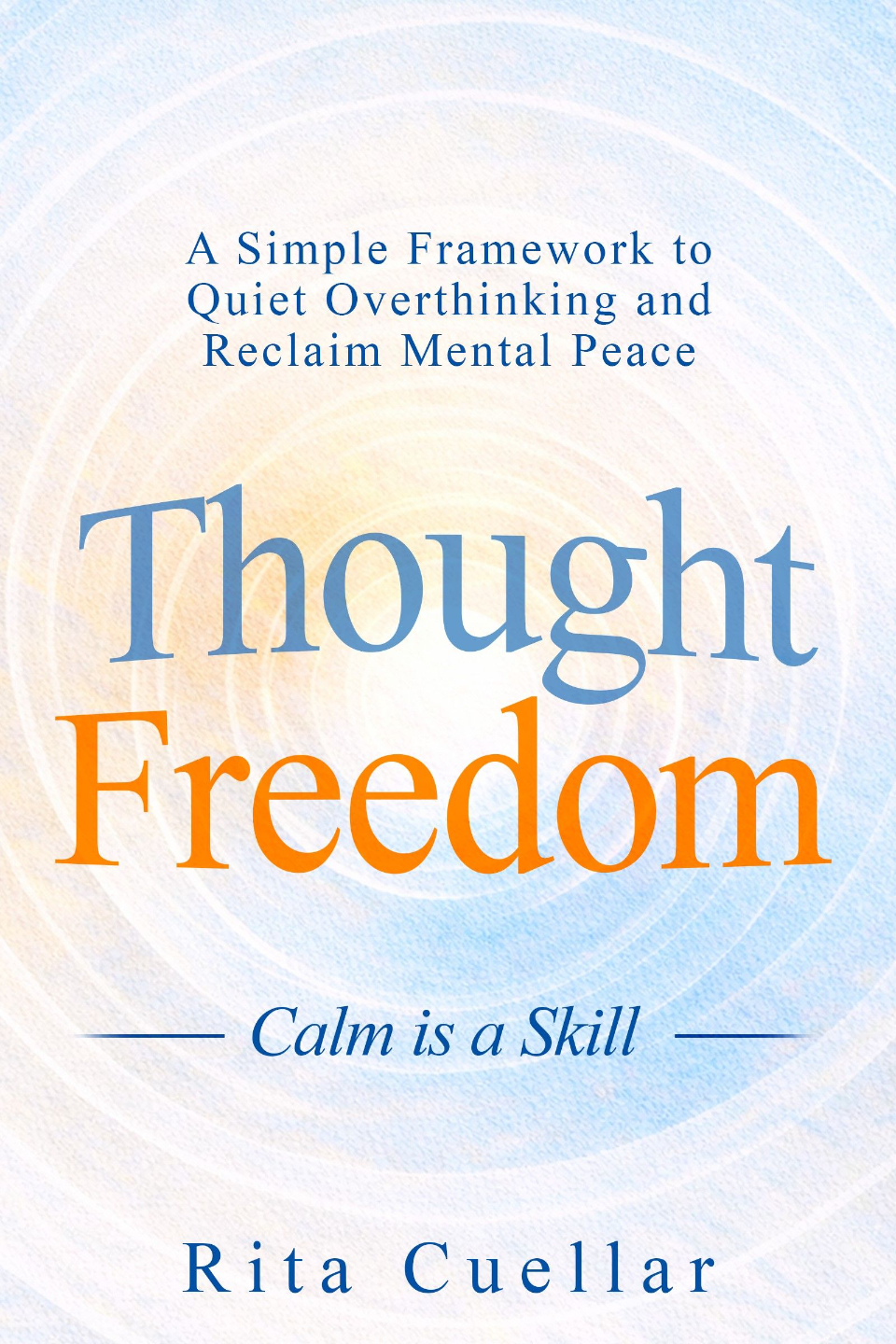
How to Stop Overthinking What People Think About You and Feel More Like Yourself
Mar 28, 2026You can lose hours to one small moment, a weird look, a quiet reply, a sentence you wish you'd said better. Then the mind goes to work. You second-guess, people-please, and hold back, all because of what someone might think.
That habit is common, and it even has a name. The spotlight effect is the tendency to believe people notice and judge us more than they do. The good news is that you can care less without becoming cold, rude, or selfish.
Why you overthink other people's opinions in the first place
If you overthink what people think about you, it doesn't mean you're weak. It usually means your brain learned that social approval feels safe, and disapproval feels risky. So, it scans for signs of rejection like a smoke alarm scanning for danger, even when there’s no real fire.

Your brain is wired to notice social risk
Humans are built for connection. For most of history, being accepted by the group helped people survive. Because of that, your brain often treats judgment like a threat, even when nothing dangerous is happening.
So when someone pauses before replying, your mind may fill in the blanks. When you say something awkward, it may replay the moment like breaking news. In plain English, that's the spotlight effect, and it makes ordinary moments feel much bigger than they are.
Recent research summaries in 2026 keep pointing to the same pattern. People with social anxiety often overestimate how much others notice them, and they also overestimate how long others remember their mistakes. In other words, your mind can act like the room is watching, even when everyone else is mostly busy with themselves.
Past embarrassment or criticism can train you to stay on guard
Sometimes this habit has roots. A harsh parent, bullying, public embarrassment, or repeated criticism can teach you to scan for approval before you speak or act. After a while, that scanning becomes automatic.
You may notice it in small ways. Maybe you over-explain texts. Maybe you replay meetings all night. Maybe you say yes when you want to say no because being seen as "difficult" feels unbearable.
That doesn't mean you're stuck this way. It means your mind learned a pattern, and learned patterns can change. As Psychology Today explains about worrying over others' opinions, the drive to be liked is normal, but it becomes costly when it runs your life.
The mindset shift that helps you stop overthinking
The goal isn't to stop caring what anyone thinks. That's not realistic, and it isn't even healthy. The goal is to stop handing your peace to other people's possible opinions.
Once that clicks, something gets lighter. You stop trying to manage every face in the room. Instead, you return to your own choices.
You can't control other people's thoughts, only your response
A lot of overthinking starts with a hidden job description: make sure everyone sees you the right way. But that job can't be done. Other people's thoughts come from their mood, history, stress, bias, and values, not only from you.
This quick comparison helps:
|
What you can control |
What you can't control |
|
Your words |
Their private judgments |
|
Your actions |
Their mood that day |
|
Your tone |
Their past experiences |
|
Your boundaries |
Their approval |
|
Your next step |
Their story about you |
That shift matters because it frees up your energy. Instead of guessing what they think, you can ask, "How do I want to show up here?"

Most people are thinking about themselves, not judging you
This may sound blunt, but it helps. Most people are not studying you with a clipboard in their head. They're thinking about their own hair, their own deadlines, their own awkward comment from two hours ago.
That doesn't mean no one ever judges. People do. But most judgments are brief, shallow, and forgettable. As this plain-English explanation of the spotlight effect points out, we often act as if we're under a bright spotlight when we're really not.
You're the center of your own attention, not everyone else's.
Holding that in mind makes social moments feel less loaded. You don't need to be perfect to be okay.
Simple ways to stop the spiral in the moment
Mindset helps, but you also need tools for real life. Use these when you're replaying a conversation, feeling embarrassed, or worrying that people are judging you.
Name the thought instead of treating it like a fact
When anxiety speaks, it often sounds certain. "They think I'm awkward." "I looked stupid." "Everyone noticed." The problem is that a thought can feel true without being true.
Try adding one short phrase: "I'm having the thought that..." Then finish the sentence. "I'm having the thought that they think I'm awkward."
That small change creates space. It reminds you that the thought is a mental event, not a verdict.
A thought is a sentence in your mind, not proof.
This kind of distance is one reason many experts recommend noticing thoughts instead of arguing with each one. If you tend to get trapped in loops, these therapist-backed tips for overthinking can also help you interrupt the spiral.
Bring your attention back to what you're doing right now
Overthinking pulls you into an imaginary courtroom. Mindfulness brings you back to the room.
Keep it simple. Feel both feet on the floor. Notice five things you can see. Take one slow breath out longer than the breath in. Then return to the task in front of you.
If you're at dinner, taste the food. If you're at work, read the next line. If you're walking, feel the ground under your shoes. The point isn't to feel calm right away. The point is to stop feeding the mental loop.
A lot of stress fades when you stop rehearsing the scene and rejoin your actual life.
Ask, "What matters to me here?" and act from that
Fear asks, "How do I avoid judgment?" A better question is, "What matters to me here?"
Maybe the answer is honesty. Maybe it's kindness, self-respect, growth, or calm. Once you know the value, let that lead the next move.
For example, if you want to speak up in a meeting, fear may say stay quiet. But if growth matters, you share your point anyway. If a friend pushes a boundary, fear may say smile and go along. Yet if self-respect matters, you say no clearly.
Values-based action doesn't erase nerves. It gives them less power. You stop living by the crowd's guesses and start living by your own compass.
Build the kind of confidence that makes opinions feel smaller
Lasting confidence doesn't come from getting everyone to approve of you. It grows when you learn, over time, that you can handle discomfort and still act like yourself.
That's why self-trust matters more than image control.
Stop chasing approval and start keeping small promises to yourself
Confidence often looks big from the outside, but it grows in small moments. You speak once instead of staying silent. You stop over-explaining. You set one honest boundary. You wear the outfit you like without asking three friends first.
Each time you keep a small promise to yourself, you send a message inward: "I've got me."
This matters because approval is shaky. It changes fast. Self-trust is steadier. It grows from behavior, not mood. Some people find it helpful to read practical ways to care less about others' opinions alongside this kind of daily practice, especially when people-pleasing has become automatic.
Own what makes you human, flaws, quirks, and all
Hiding often makes shame louder. When you treat every flaw like a secret, you give it power. On the other hand, when you can admit, "I'm awkward sometimes," or "I get nervous," the fear starts to shrink.
This is not about putting yourself down. It's about dropping the fantasy that you must look polished at all times. Nobody does.
Ironically, people often trust you more when you stop performing perfection. A small stumble, owned without panic, usually lands better than tense self-protection.
Use social media with more distance and less comparison
Social media can train you to watch yourself from the outside. You start thinking about how your life looks instead of how it feels. That can make overthinking worse, because you're always measuring your raw life against someone else's edited one.
So make the app work for you. Mute accounts that trigger comparison. Take breaks from scrolling when your mind feels noisy. Notice when you're looking for reassurance through views, likes, or replies.
Most of all, remember what you're seeing. It's a selected highlight reel, not a full day, not a full personality, and not the truth about your worth.
You don’t need to control what people think to feel more like yourself.
If you’ve been stuck overthinking every interaction or second-guessing how you’re perceived, it’s not because you’re doing something wrong; it’s because your mind is trying to protect you.
But you don’t have to stay in that loop.
👉 Download the Thought Freedom Reset and learn how to calm your mind, interrupt the pattern, and start showing up with more clarity and confidence.
You don’t need everyone’s approval to move forward—just your next step.
If overthinking has been running in the background of your day, you don’t need more information—you need a way to interrupt the pattern.
The 7-Day Overthinking Reset gives you simple, daily steps to help you catch the loop, create space, and feel calmer—without trying to force your mind to be quiet.
Get Calm, Clear, and Out of Your Head
Simple tools and insights to help you break the overthinking loop—sent straight to your inbox.
Don't worry, your information will not be shared.
We hate SPAM. We will never sell your information, for any reason.