How to Stop Replaying Conversations in Your Head (Without Overthinking Every Detail)
Mar 24, 2026It often starts at night. The room is quiet, but your mind isn't. You replay one small comment, one weird pause, one look on someone's face, and suddenly the whole conversation feels like a crime scene.
If that sounds familiar, you're not broken, and you’re not alone in this. You're probably dealing with rumination, which is a loop of repetitive thinking that feels useful but rarely helps. People do this because they care about connection, safety, and being understood. In other words, your mind is trying to protect you, even if it's doing a poor job.
The good news is that you can stop the replay. A few simple shifts can help you calm your body, catch the mental loop early, and move on without shaming yourself for having a human brain.
There’s also a simple way to start interrupting this pattern in real time.
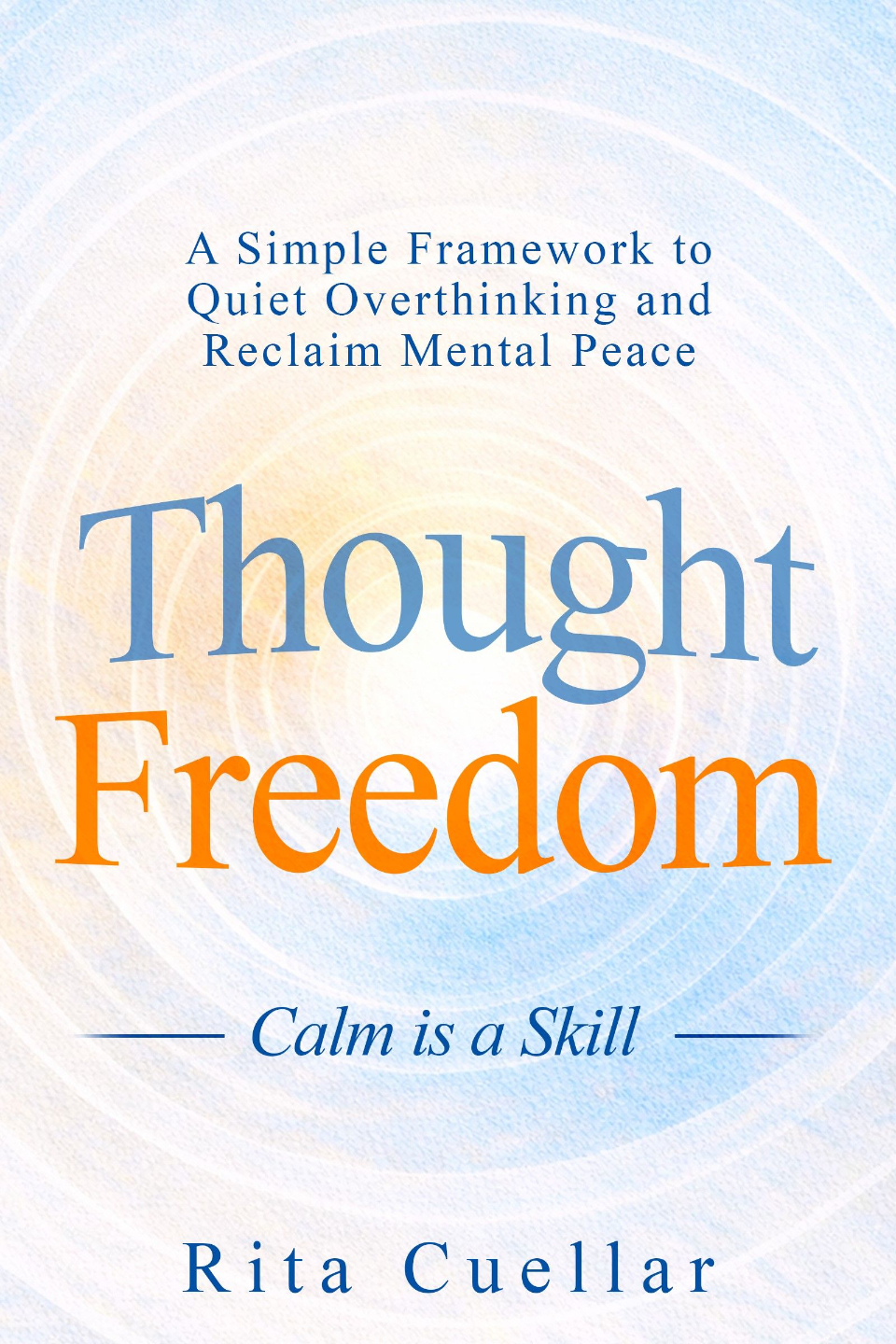
If you tend to get stuck replaying conversations or second-guessing yourself, I created a short 7-day reset that walks you through how to calm the loop, feel more grounded, and respond differently, day by day.
👉 You can start the reset here
Understand why you replay conversations in the first place
Most people don't replay conversations because they love overthinking. They do it because their brain flags a social moment as important, risky, or unfinished. That can happen after a conflict, a joke that landed badly, or even a normal chat that felt slightly off.
Fear of judgment is a big driver. If part of you worries, "Did they think I was rude?" or "Did I sound stupid?" your mind keeps checking the tape. Perfectionism also feeds the loop. When you expect yourself to say the exact right thing every time, even a small slip can feel huge.
Anxiety makes this stronger. Social anxiety can turn a tiny moment into a full-body alarm. Your brain treats a social mistake like a threat, even when nothing dangerous is happening. This pattern is often called post-event rumination, in which the mind keeps replaying a situation, seeking a better outcome or greater certainty. Read more here from Psychology Today: 5 Reasons We Keep Replaying Past Conversations.

Unresolved feelings matter too. If you felt hurt, embarrassed, angry, or dismissed, your mind may keep circling because the emotion never settled. The same goes for the need for control. When you can't know what someone meant or what they think of you now, replaying can feel like a way to get answers.
Past experiences also shape the habit. If you grew up around criticism, unstable relationships, or trauma, your nervous system may stay on high alert in social situations. Then one awkward exchange can light up old fears in a flash. As PsychCentral explains, rumination is common, and it often shows up when stress and self-doubt are already high.
So, start here: this habit is not proof that you're weak. It's a sign that your mind is trying, badly, to keep you safe.
Notice when reflection turns into rumination
Not all thinking is bad. Sometimes it helps to review a talk and learn from it. Healthy reflection sounds like, "Next time I'll speak up sooner," and then you move on. Rumination sounds like, "Why did I say that? What do they think of me? I ruined everything," on repeat.
That difference matters.
Recent mental health findings through 2026 still show that repetitive negative thinking can fuel anxiety, low mood, poor sleep, and higher stress. It also keeps people stuck because it focuses on threat, not action. You feel busy, but you're not getting anywhere.
Here's a simple way to tell the two apart:
|
Helpful reflection |
Rumination |
|
Has a clear lesson |
Chases certainty |
|
Ends within minutes |
Repeats for hours or days |
|
Leads to a next step |
Leaves you more upset |
|
Stays grounded in facts |
Fills in gaps with guesses |
If your thinking makes you feel worse but gives you no clear action, it's probably rumination.
That's why naming the pattern matters. Instead of saying, "I need to figure this out," try, "My brain is looping." That small shift creates distance. It turns the thought from a command into a habit you can interrupt.
You don't need to solve every social moment. Often, you need to stop feeding it.
If you want a simple structure to practice this daily, the 7-Day Overthinking Reset walks you through it step by step.
Quick techniques to break the loop in the moment
When you catch yourself replaying a conversation, don't start by arguing with every thought. First, break the momentum. Rumination thrives on stillness, isolation, and mental wrestling. It weakens when you bring in the body, time limits, and real-world action.
These are the same types of tools you’ll start practicing inside the 7-Day Overthinking Reset.

Use this simple reset:
- Label it fast: Say, "I'm replaying that conversation again." This helps you step back instead of falling deeper in.
- Set a short timer: Give yourself five minutes to think about it on purpose. When the timer ends, shift tasks.
- Get into your senses: Press your feet into the floor, hold something cold, or name five things you can see.
- Write the facts only: Put down what was said, what you felt, and what you actually know. Leave out mind-reading.
- Move your body: Walk, stretch, wash dishes, or step outside. Motion tells your nervous system the threat has passed.
These tools work because they interrupt the cycle early. Recent advice gathered by therapists and mental health writers points to the same pattern: label, limit, ground, and redirect. Real Simple's roundup on interrupting rumination shares similar strategies, especially using the body to stop feeding the thought spiral.
One more trick helps a lot: ask, "Is this a problem I can solve right now?" If the answer is no, stop treating it like an emergency. If the answer is yes, take one clean action. Send the text. Clarify the point. Apologize if needed. Then let the rest be uncertain.
That last part is hard, but it's where relief lives.
What to tell yourself after an awkward conversation
Most people make the loop worse with harsh self-talk. They say things like, "I'm so embarrassing," or "I always mess things up." Your brain grabs those lines and uses them as proof that the replay matters.
Try a steadier response instead.
You can tell yourself:
- "That felt awkward, but awkward isn't dangerous."
- "I don't know what they think, and I don't need to guess."
- "If I need to repair something, I can do that directly."
- "One conversation does not define me."
This isn't fake positivity. It's accuracy. Social moments are messy. People miss cues, talk too fast, and over-explain when they're nervous. That's normal.
Sometimes a repair really is needed. If you interrupted someone, snapped at them, or spoke unclearly, make it simple. A brief follow-up like, "I've been thinking about our talk, and I want to clarify what I meant," can close the loop. After that, stop reopening the case.
If you keep chasing certainty, the mind never rests. As Meridian Counseling notes, overthinking often grows from anxiety, not from actual evidence that something went wrong.
You don't need a perfect memory of the conversation. You need a kinder interpretation of what it means to be human.
Build habits that make replaying conversations less likely
In-the-moment tools help, but long-term habits matter too. Rumination gets louder when your body is worn down, and your mind is overstimulated.
Sleep is a big one. Everything feels more threatening when you're tired. Social media can also make replaying worse, especially if you're already comparing yourself to others or checking for signs that someone is upset. Constant alerts don't give your mind much room to settle, either.
A few steady habits can lower the odds of getting stuck:
- Practice brief mindfulness a few times a week. Ten quiet minutes can train your attention to return to the present.
- Set a worry window earlier in the day. Give your mind 10 minutes to write down your worries, then close the notebook.
- Reduce false detective work. Stop scanning texts, tones, and facial expressions for hidden meaning.
- Use CBT-style questions. Ask, "What evidence do I have?" and "What story am I adding?"
- Talk to someone safe. A grounded friend can help you reality-check without adding more drama.
If replaying conversations takes up hours, wrecks your sleep, or feels impossible to stop, it may be time for extra support. That's especially true if the loop comes with panic, depression, or obsessive doubt. NOCD's overview of constant conversation replay points out that, for some people, the pattern can connect with OCD-style checking and reassurance-seeking.
Getting help doesn't mean the problem is severe. It means you're tired of living with a mind that keeps hitting replay.
Conclusion
If you keep replaying conversations in your head, the answer isn’t more self-criticism. It’s learning to spot the loop, calm your body, and stop treating every moment like a problem you need to solve.
With practice, you can replace the replay with something steadier, self-trust.
If you want help doing that in a simple, structured way, the 7-Day Overthinking Reset will guide you.
If overthinking has been running in the background of your day, you don’t need more information—you need a way to interrupt the pattern.
The 7-Day Overthinking Reset gives you simple, daily steps to help you catch the loop, create space, and feel calmer—without trying to force your mind to be quiet.
Get Calm, Clear, and Out of Your Head
Simple tools and insights to help you break the overthinking loop—sent straight to your inbox.
Don't worry, your information will not be shared.
We hate SPAM. We will never sell your information, for any reason.