Why You Feel Stuck in Your Head and How to Get Out
Mar 27, 2026
Your mind can start to feel like a room with no door. You replay the past, brace for the future, and then freeze in the present.
That stuck feeling often comes from overthinking, rumination, or worry. Overthinking means your thoughts keep circling. Rumination looks back at what went wrong. Worry jumps ahead to what might go wrong. This is common during stress, burnout, big life shifts, social pressure, and constant phone use. The good news is that you can loosen the loop, even if insight alone hasn't helped.
What's really happening when you feel stuck in your head
When you feel trapped in thought, your brain isn't broken. It's trying to protect you, but it's doing it in a clumsy way.
Stress pushes the mind into self-focused loops. You scan for danger, search for answers, and review every detail. Then thinking starts to feel like a job you can't clock out of. More thinking doesn’t always bring clarity; sometimes it just creates more noise.
Rumination tends to look backward. Worry looks forward. Both can make action feel harder, because they pull you away from what's right in front of you. Many people also carry a hidden belief: "If I think about this long enough, I'll solve it." That belief keeps the cycle alive.
Rumination, worry, and overthinking are similar, but not the same
These words get mixed together, but naming your pattern helps. If you know what your mind is doing, you can respond in a better way.
Rumination is backward-looking. You replay an awkward text, a missed chance, or something you wish you'd said. It often sounds like, "Why did I do that?"
Worry is forward-looking. Your brain runs future scenes and worst-case outcomes. It sounds like, "What if this falls apart?"
Overthinking is the wider umbrella. It can include both, plus endless comparing, second-guessing, and trying to find the perfect answer. For a simple breakdown, this worry vs. rumination explanation shows how the loop changes direction but keeps the same grip.
The key point is simple: all three can feel useful in the moment. They promise control. Still, they often leave you more stuck, not less.
Stress, perfectionism, and self-doubt can trap your mind in a loop
Overthinking rarely appears out of nowhere. Usually, it grows in conditions that make your nervous system feel unsafe.
High stress is a major trigger. So are burnout, money strain, relationship conflict, and big changes like moving, a breakup, or a new job. Recent US data from March 2026 shows burnout remains widespread, with about 66 to 76 percent of workers reporting some level of it. When your mind already feels stretched thin, it grabs for control wherever it can.
Perfectionism adds fuel. If every choice feels loaded, you'll keep reviewing and revising long after it helps. Social fear does the same. You start trying to predict how people will judge you, and then every conversation becomes a puzzle.
Self-doubt sits underneath many of these loops. You don't trust your read on the situation, so you keep checking it in your head. That pattern is common in people under pressure, and it can feed anxiety and exhaustion. This overview of how perfectionism can contribute to anxiety and burnout connects those dots well.
The hidden habits that keep the cycle going
Most people don't choose to feed overthinking. They do it by accident, because the habits feel helpful at first.
The mind loves short-term relief. If replaying, checking, or researching gives you a tiny sense of control, you'll want more of it. Yet those habits often make the loop stronger over time.
Trying to think your way to certainty usually backfires
Your brain wants the perfect answer before you act. That sounds smart, but life rarely gives perfect answers.
So, you replay the talk, rewrite the email, and rehearse every possible outcome. You tell yourself you're being careful. In reality, you may be training your mind to believe uncertainty is dangerous.
That's how analysis paralysis starts. The more you review, the less sure you feel. Small choices get heavy. Big choices feel impossible. Then the lack of action becomes another thing to judge yourself for.
A tired mind often mistakes more thinking for progress.
This is why overthinking can feel busy while your life feels paused. Insight matters, but insight without action often turns into mental spinning.
Too much input makes an already busy mind even louder
A stressed brain doesn't need more noise, but modern life keeps adding it. Phone alerts, doomscrolling, constant news, group chats, short videos, and social comparison all crowd the mind.
Poor sleep makes it worse. So does the lack of quiet. If your attention is pulled all day, your brain never gets to settle. By night, it's still buzzing.
That frazzled attention is a real theme in 2026. Many people are functioning on the outside while feeling mentally thin underneath. Burnout data backs that up, especially for younger adults. When your system is overloaded, even normal decisions can feel huge.
You may notice this pattern: the more overwhelmed you feel, the more you reach for your phone. Then your mind gets even louder. That's why "thinking less" isn't the answer by itself. You also need less input, more pauses, and more space for your mind to land.
How to get out of your head and back into your life
The goal isn't to stop every thought, it’s to stop getting pulled into every one. That would only create a new fight in your mind.
A better goal is to stop feeding the loop, calm your body, and take the next helpful step. Once you do that, thoughts often lose some of their power.
Use your body to calm your mind first
When your body feels on edge, your thoughts get sharper and darker. So, start there.
Slow your breathing. Try inhaling for four counts and exhaling for six. Longer exhales can help your body settle. Next, ground yourself through your senses. Name five things you see, four you feel, three you hear. This pulls attention out of the mental storm and back into the room.
Short walks help too. So does stretching, splashing cold water on your face, or listening to nature sounds for a few minutes. None of these is a magic fix. They simply tell your nervous system, "You're here, and you're safe enough right now."
That shift matters because clear thinking usually comes after the body softens, not before. This piece on interrupting the worry loop shares similar tools rooted in CBT, ACT, and mindfulness.
Challenge the thought, then choose one small action
Once the alarm turns down a little, work with the thought itself. Keep it simple.
First, spot the thought. Write it down in one sentence. "I'm going to mess this up." "They must be upset with me." "If I choose wrong, everything falls apart."
Next, test it. Ask, "What facts support this?" Then ask, "What facts don't?" You're not trying to force a happy thought. You're trying to build a more balanced one.
For example, "I might not do this perfectly, but I can handle one step." Or, "I don't know what they think, and I don't need to solve it tonight."
Then move. Action breaks loops. Use the two-minute rule and do the smallest useful step now. Send the email draft. Wash one dish. Open the document. If a decision is dragging on, give it a 24-hour deadline. Many thought spirals shrink when your feet start moving.
If you want extra support with this skill, these strategies to stop the spinning thoughts give a solid starting point.
Daily habits that make overthinking less likely
You won't prevent every spiral. Still, small routines can lower the mental noise that feeds them.
Think of this as emotional hygiene. You brush your teeth before there's a problem. Your mind benefits from the same kind of steady care.
Build a simple reset routine for busy days
Keep your reset routine short enough to use on hard days. That's what makes it work.
A good example looks like this: ten minutes of mindfulness, a screen cut-off before bed, regular sleep, some form of movement, and a quick feelings check-in. Ask yourself, "What am I carrying today?" Putting a name on the feeling can lower its intensity.
Mindfulness is getting more attention in 2026 because people want fast, real-world relief, not long rituals they can't keep up with. These mindfulness trends in 2026 reflect that shift toward brief, usable practices.
You don't need a perfect routine. You need a repeatable one. Simple habits done often help more than big plans done once.
Know when it's time to get support
Sometimes self-help isn't enough, and that's normal. If overthinking keeps wrecking your sleep, driving constant anxiety, pulling your mood down, or making daily life hard to manage, more support can help.
CBT is useful because it teaches you how to test thoughts and change patterns. ACT can help you make room for thoughts without obeying them. Trauma-informed therapy matters when your mind stays on high alert due to past experiences. Group support, teletherapy, and digital tools also make help easier to reach.
Support doesn't mean you've failed. It means the loop has gotten sticky, and you don't have to untangle it alone.
Your mind gets stuck for real reasons, but that doesn't mean you have to live there. Overthinking can change when you calm your body, question the story, and take one small step back into life.
You don’t need to solve everything in your head to move forward.
If you’ve been stuck in loops of overthinking, it’s not because you’re doing something wrong; it’s because no one taught you how to interrupt the pattern.
The good news is that this is a skill you can learn.
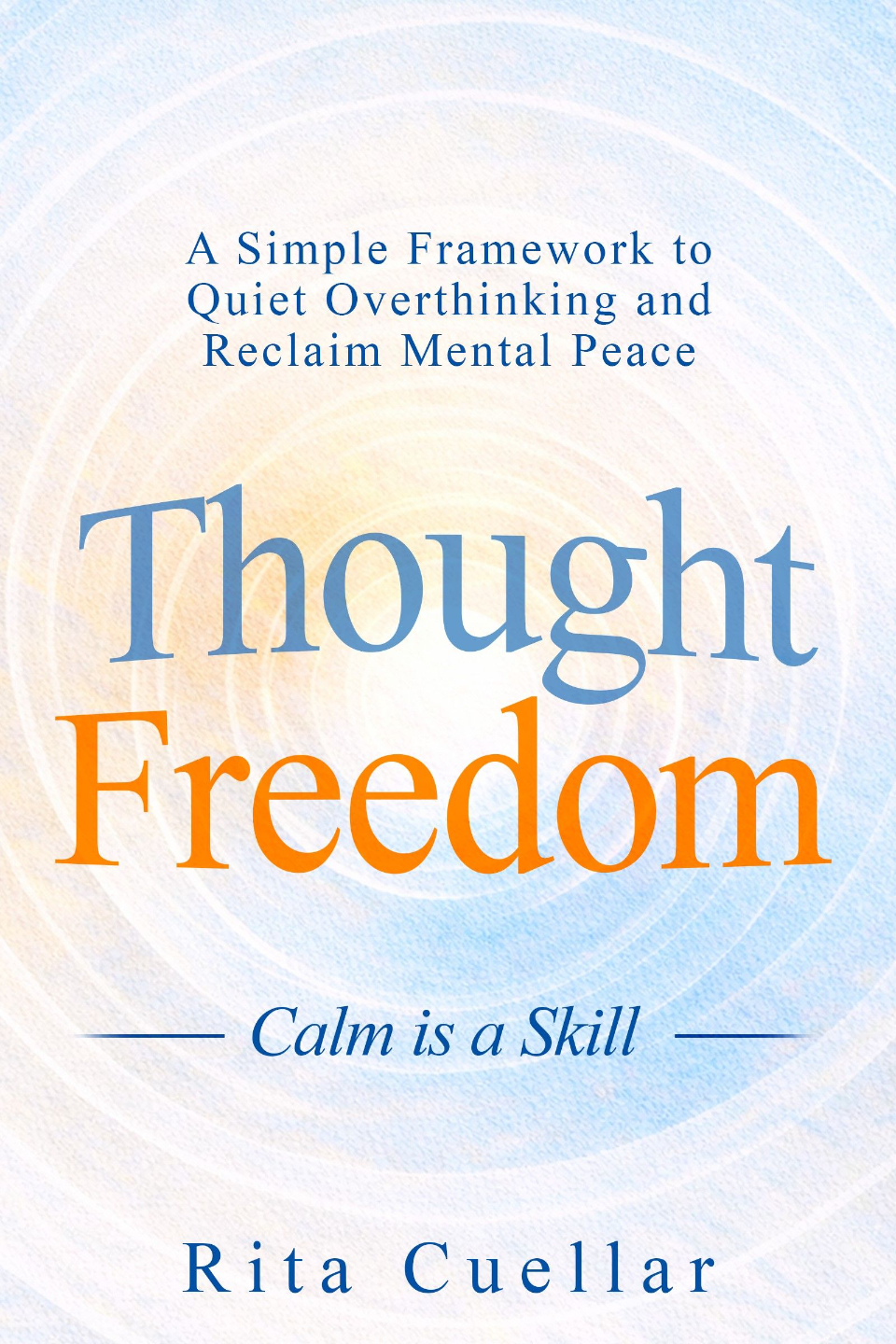
👉 Download the Thought Freedom Reset and learn how to calm your mind, break the loop, and take control in real time.
Start with one small step today. That’s how you get out of your head—and back into your life.
If overthinking has been running in the background of your day, you don’t need more information—you need a way to interrupt the pattern.
The 7-Day Overthinking Reset gives you simple, daily steps to help you catch the loop, create space, and feel calmer—without trying to force your mind to be quiet.
Get Calm, Clear, and Out of Your Head
Simple tools and insights to help you break the overthinking loop—sent straight to your inbox.
Don't worry, your information will not be shared.
We hate SPAM. We will never sell your information, for any reason.