Why You Overthink at Night (And How to Calm Your Mind Before Sleep)
Mar 30, 2026You finally get into bed, turn off the light, and expect relief. Instead, your brain starts talking louder than it did all day. Overthinking at night is common, and it doesn't mean anything is wrong with you.
For many people, racing thoughts before bed show up right when the world gets quiet. That can feel lonely, but it's a normal pattern, not a personal flaw. The good news is that you can learn to calm your mind before sleep with a few simple changes.
Why overthinking feels stronger at night
Night has a way of making ordinary thoughts feel heavier. During the day, your attention is pulled in ten directions. At night, those distractions drop away, and your mind finally hears itself.
That shift matters. When things slow down, the brain often starts sorting stress, regret, loose ends, and worries about tomorrow. A thought you barely noticed at 2 p.m. can feel huge at 12:30 a.m. because now it has center stage.
This pattern is so common that many sleep and mental health writers describe it as a predictable after-dark response, not a random failure. If you want a simple explanation of that pattern, this piece on why thoughts get louder after dark puts it in plain language.

Your mind finally has space to process the day
Busy days can hide a lot. You answer messages, finish tasks, talk to people, and keep moving. Meanwhile, feelings get pushed to the side.
Then bedtime arrives. Suddenly, your mind replays the meeting where you sounded awkward. It remembers the text you never sent. It starts planning tomorrow's problems at full volume.
This doesn't mean your mind is trying to punish you. It's trying to finish open loops. The trouble is that bedtime is a poor time for problem-solving. You're tired, less flexible, and more likely to think in circles.
Silence and stillness can make small worries feel bigger
Stillness can feel peaceful, but it can also feel exposing. In the dark, you can't send the email, fix the argument, or check the calendar. Because you can't act, your brain may treat the thought like an emergency.
That’s why small concerns can swell at night. A simple worry turns into a long mental debate. Then the pressure to fall asleep joins the pile, and now you're worrying about worrying.
A tired brain doesn't solve problems well; it often repeats them.
Hidden triggers that can make nighttime thoughts spiral
Sometimes the problem starts in your mind. Other times, your habits or body quietly add fuel. That's why nighttime overthinking often feels confusing. It rarely has one single cause.
Stress, unfinished tasks, and bottled-up feelings follow you to bed
Mental load is heavy, even when you don't notice it. If you spent the day making decisions, managing other people's needs, or carrying guilt about something unresolved, bedtime may be when it all lands.
Unfinished tasks can be especially noisy. Your brain hates loose ends, so it keeps nudging you. Remember the bill. Call your sister. Fix that mistake. Prepare for Friday.
Emotions work the same way. If you swallowed irritation, sadness, or shame during the day, those feelings may resurface at night, wearing a different mask. They might look like worry, restlessness, or a sense that something is "off."
That is why processing concerns earlier helps. A quick check-in after dinner, a short walk, or ten minutes of writing can stop everything from arriving at once when your head hits the pillow.
Your body can add to the problem without you noticing
Not every racing thought starts as an emotional issue. Sometimes your body is stirred up first, and your mind tries to explain the feeling after.
Late caffeine is a common trigger. So is alcohol, which may make you sleepy at first but can disrupt sleep later. Screen use matters too, because bright light and endless scrolling keep your brain alert when it needs to power down.
Recent 2026 sleep reporting keeps pointing to the same habits, doomscrolling in bed and irregular bedtimes make nighttime rumination worse. Even hunger can play a role. For some people, a too-light dinner or low blood sugar feels like anxiety, which then feeds more thoughts.
What to do when you can't stop thinking in bed
When your brain is running, the goal isn't to force sleep, it’s to stop feeding the loop. That usually backfires. Instead, try to lower the mental volume and give your attention somewhere gentler to rest.
Use a simple mental anchor to break the thought loop
A mental anchor is anything calm, boring, and steady enough to pull you out of the loop. It doesn't need to be deep. It only needs to be repeatable.
You can try:
- Slow breathing: Breathe in for four, then out for six.
- A neutral word: Repeat a plain word like "soft" or "calm."
- A peaceful scene: Picture a quiet beach, cabin, or trail, and add sensory detail.
These work because they shift attention away from rumination. Your thoughts may still pop up, but you stop feeding them. Then the mind has less to chase.
If you want more ideas, this guide to science-backed bedtime techniques covers similar tools, including breathing and cognitive shuffling.
If sleep isn't coming, stop forcing it
Lying in bed for a long time while feeling tense teaches your brain the wrong lesson. Bed starts to feel like a place for stress, not rest.
A better move is to get up after about 20 minutes if you're clearly awake and frustrated. Keep the lights dim. Do something quiet and low-key, like reading a few pages, stretching, or sitting with soft music. Then return to bed when you feel sleepy again.
This approach sounds simple, yet it helps because it rebuilds the link between bed and sleep. You're teaching your brain, "This is where I rest," not "This is where I battle my thoughts."
Don't try to win a fight with sleep. Step out of the fight instead.
How to calm your mind before sleep so overthinking starts less often
The best fix often happens before bedtime. A short evening routine can make your mind feel less ambushed once the lights go out.
Do a brain dump before bed, not after your head hits the pillow
If thoughts keep circling, get them out of your head earlier. Write down what you're worried about, what you need to do tomorrow, or what still feels unresolved.
This doesn't need to become a long journal session. Five to ten minutes is enough. The point is to show your brain that the thought has been caught and saved.
Some people like a set "worry time" after dinner. Others prefer a simple list with two columns, one for concerns, one for next steps. Either way, putting thoughts on paper often lowers the urge to rehearse them in bed. A therapist-written piece on building a sleep routine for racing thoughts makes the same point, your mind settles more easily when it knows tomorrow has a plan.

Create a wind-down routine that tells your brain the day is done
You don't need a perfect evening ritual. You need a repeatable signal.
For 30 to 60 minutes before bed, make things quieter and dimmer. Put your phone farther away. Lower the lights. Let your body notice that nothing more is required tonight.
Then choose one or two calming actions. Gentle stretching helps some people. Reading works for others. Soft music, prayer, meditation, or a warm shower can also help. A short gratitude list can shift your attention away from threat and toward safety.
A regular bedtime matters too. Recent 2026 sleep coverage has highlighted a simple problem: many people plan when to wake up, but not when to slow down. When bedtime moves all over the place, your mind never gets a clear rhythm.

When nighttime overthinking may be a sign you need extra support
Sometimes self-help tools aren't enough, and that doesn't mean you've failed. It may mean your sleep problem has grown past what a few routine changes can fix on their own.
Signs it's time to talk with a professional
Pay attention if bedtime fills you with dread, if panic symptoms show up at night, or if your sleep has been poor for weeks. Also notice whether daytime life is getting harder. Maybe you're more irritable, forgetful, foggy, or emotionally raw.
If that sounds familiar, a therapist or sleep specialist can help. Cognitive Behavioral Therapy for Insomnia, often called CBT-I, is a well-known treatment for broken sleep, sleep anxiety, and rumination. Mass General offers a clear overview of how CBT-I can help, and it's often a strong next step when overthinking and insomnia keep feeding each other.
Nighttime overthinking is common, understandable, and changeable. Your mind isn't broken; it's often tired, overstimulated, or trying to tie up loose ends at the worst possible hour.
Start small tonight. Pick one tool, not ten, and let it become familiar. Over time, those small habits can teach your brain a new message: bedtime is safe, and sleep doesn't have to feel like a struggle.
Ready to quiet your mind at night?
You don’t need to solve everything before you sleep.
If your mind comes alive the moment things get quiet, it’s not because something is wrong—it’s because your brain is trying to process everything it didn’t have time for during the day.
But you don’t have to stay stuck in that cycle.
The 7-Day Overthinking Reset shows you exactly how to interrupt nighttime spirals, calm your mind, and feel more at ease when your head hits the pillow.
Start with one small shift tonight.
And if you’re ready to go deeper…
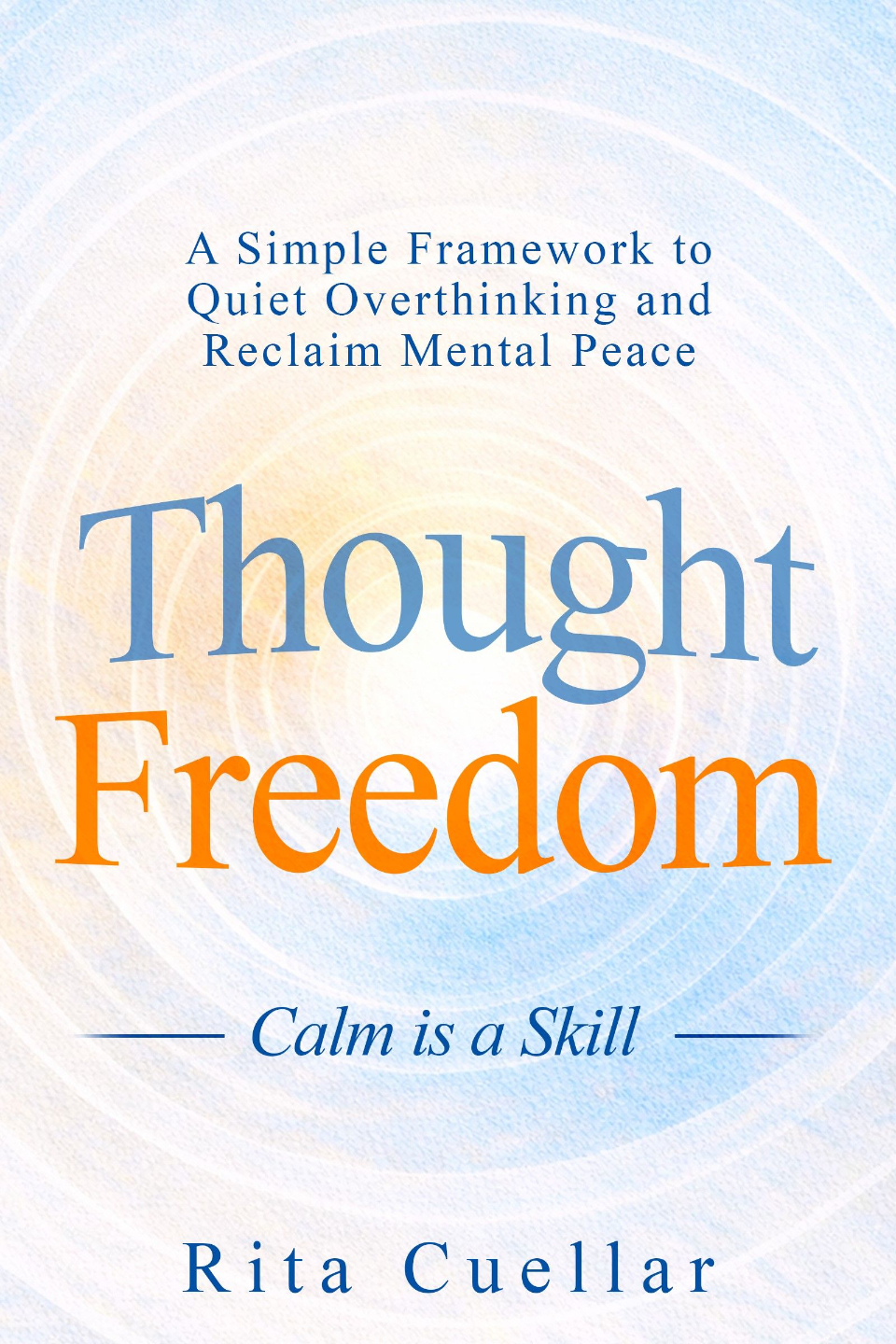
The Thought Freedom Course helps you retrain how your mind responds to stress, pressure, and uncertainty—so overthinking stops running the show completely.
If overthinking has been running in the background of your day, you don’t need more information—you need a way to interrupt the pattern.
The 7-Day Overthinking Reset gives you simple, daily steps to help you catch the loop, create space, and feel calmer—without trying to force your mind to be quiet.
Get Calm, Clear, and Out of Your Head
Simple tools and insights to help you break the overthinking loop—sent straight to your inbox.
Don't worry, your information will not be shared.
We hate SPAM. We will never sell your information, for any reason.