Why You Second-Guess Yourself (And How to Trust Your Decisions Again)
Mar 31, 2026You make a choice… then replay it for hours. Maybe it was a text, a career move, a breakup, or even what felt like a small daily call. Second-guessing can make even simple decisions feel unsafe.
Most of the time, that doubt is not proof that you chose badly. It's often driven by fear, perfectionism, too many options, or the need for approval. And when life is changing, even a good choice can feel shaky.
The good news is that self-trust isn't something you're born with or without. You can rebuild it, one honest decision at a time.
What second-guessing really is, and why it keeps happening
Second-guessing is going back over a decision again and again without any new, useful information. Healthy reflection says, "What can I learn here?" Chronic doubt says, "What if I ruined everything?"
That difference matters. Reflection helps when facts change. Ongoing doubt drains your energy, raises stress, and slowly teaches your brain not to trust itself. Recent research summarized by The Conversation suggests thinking things through can help some people, but for others, it lowers confidence and fuels more uncertainty.

The hidden drivers, fear, perfectionism, and the need to get it exactly right
A lot of second-guessing starts with fear. Fear of missing out. Fear that a better option is still out there. Fear that one wrong move will define you.
Perfectionism adds more pressure. If you believe there is one flawless answer, every real-life option will feel incomplete. So, you keep circling, comparing, and reopening the case.
This hits harder when anxiety is already high or self-esteem is low. Then a normal choice, like taking a new job or setting a boundary, can feel loaded with danger. As Real Simple explains in its look at sense-checking, constantly seeking outside reassurance can become a habit, especially when anxiety is involved.
Why hard feelings after a decision do not always mean you chose wrong
A painful feeling is not always a warning sign. Sometimes it's the cost of change.
Leaving a bad job can still bring grief. Ending an unhealthy relationship can still feel lonely. Choosing a budget can still bring fear, even when it protects you.
Discomfort after a decision usually means the choice matters, not that it was wrong.
That is why it helps to separate emotion from evidence. Fear may say, "Go back." Facts may say, "This was the healthier choice."
The moments that make self-doubt louder
Some seasons of life turn up the volume on self-doubt. When you can spot those moments, the spiral loses some of its power.
Big life changes can make even good decisions feel shaky
Moves, breakups, career changes, money choices, parenting shifts, and health decisions all bring loss along with hope. Even when the path is right, part of you may still miss what was familiar.
That doesn't mean your choice was wrong. It means your nervous system is adjusting. Nostalgia can make the past look safer than it was. Fear can make the future look worse than it is.

Too many options can overload your brain
Modern life offers endless choices. Compare ten apartments, fifty skin-care products, or hundreds of career takes online, and your brain starts to stall.
This is choice overload. Instead of feeling free, you feel stuck. A recent Psychology Today article on regret and long deliberation notes that thinking too long about personal choices can backfire, especially when no answer is perfect.
Add social media, and the problem gets worse. Someone else always seems more certain, more successful, or more at peace. That comparison can make your own path look doubtful, even when it fits you better.
The Pattern That Keeps You Stuck
Decide → doubt → rethink → delay → stress
The longer you stay in that loop, the less you trust yourself—and the harder the next decision becomes.
How to stop the spiral and make decisions with more calm
You don’t need a new personality. You need a simpler process.
Use a simple filter, facts, feelings, and what matters most
When your mind gets noisy, sort the decision into three parts:
- Facts, what you know right now, not what you fear.
- Feelings, what you feel, without letting those feelings make the whole case.
- Values, what matters most to you in this season.
Then ask one clean question: Am I acting from fear, or from real care?
That question changes a lot. It helps you see whether you're protecting your peace, your health, your family, or your future, instead of chasing false certainty.
Set a time limit so overthinking does not run the show
Without a limit, your brain will keep searching for a perfect answer that doesn't exist. So, give the decision a container.
Ten minutes may be enough for a small choice. A week may be enough for a job move. Pick a deadline, gather what you need, then decide when the time is up.
This is not careless. It's protective. A time limit saves energy and keeps doubt from becoming your boss. It also teaches you to choose a good enough option and move forward.
How to rebuild trust in your own judgment, one choice at a time
Self-trust grows from proof. You create that proof through action.

Create small wins that prove you can rely on yourself
Start small. Keep a note on your phone or in a journal. Write down decisions that worked out, times you kept a promise to yourself, or moments when you chose in line with your values.
Those small wins matter. They build evidence against the voice that says you always get it wrong. Over time, your brain starts to see a fuller picture.
Change the voice in your head from harsh to honest
Harsh self-talk keeps second-guessing alive. So, catch the line, name the trigger, and replace it with something true.
Instead of, "I always mess this up," try, "I'm under stress, and I'm making a thoughtful choice." Instead of "I need to be sure," try "I don't need perfect certainty to move."
Honest self-talk is not fake positivity. It's steadier than that, and far more useful.
Use short reset habits when your mind feels noisy
Sometimes the issue is not the decision. It's your state.
Take five slow breaths. Go for a short walk. Write one page by hand. Step away for an hour before answering. A calmer body often leads to a clearer mind, because panic makes everything feel urgent.
You do not build self-trust by never making mistakes. You build it by making thoughtful choices, learning from them, and refusing to abandon yourself after the fact.
Start small today. Pick one decision, give it one deadline, and answer it with one kinder thought.
Ready to stop second-guessing yourself?
You don’t need to keep replaying every decision or searching for perfect certainty before you move forward.
If second-guessing is something you deal with regularly, reading about it isn’t enough—you need a way to interrupt the pattern in real time.
👉 The 7-Day Overthinking Reset shows you exactly how to calm the mental loop, make clearer decisions, and start trusting yourself again.
Start with one small shift today.
And if you’re ready to go deeper…
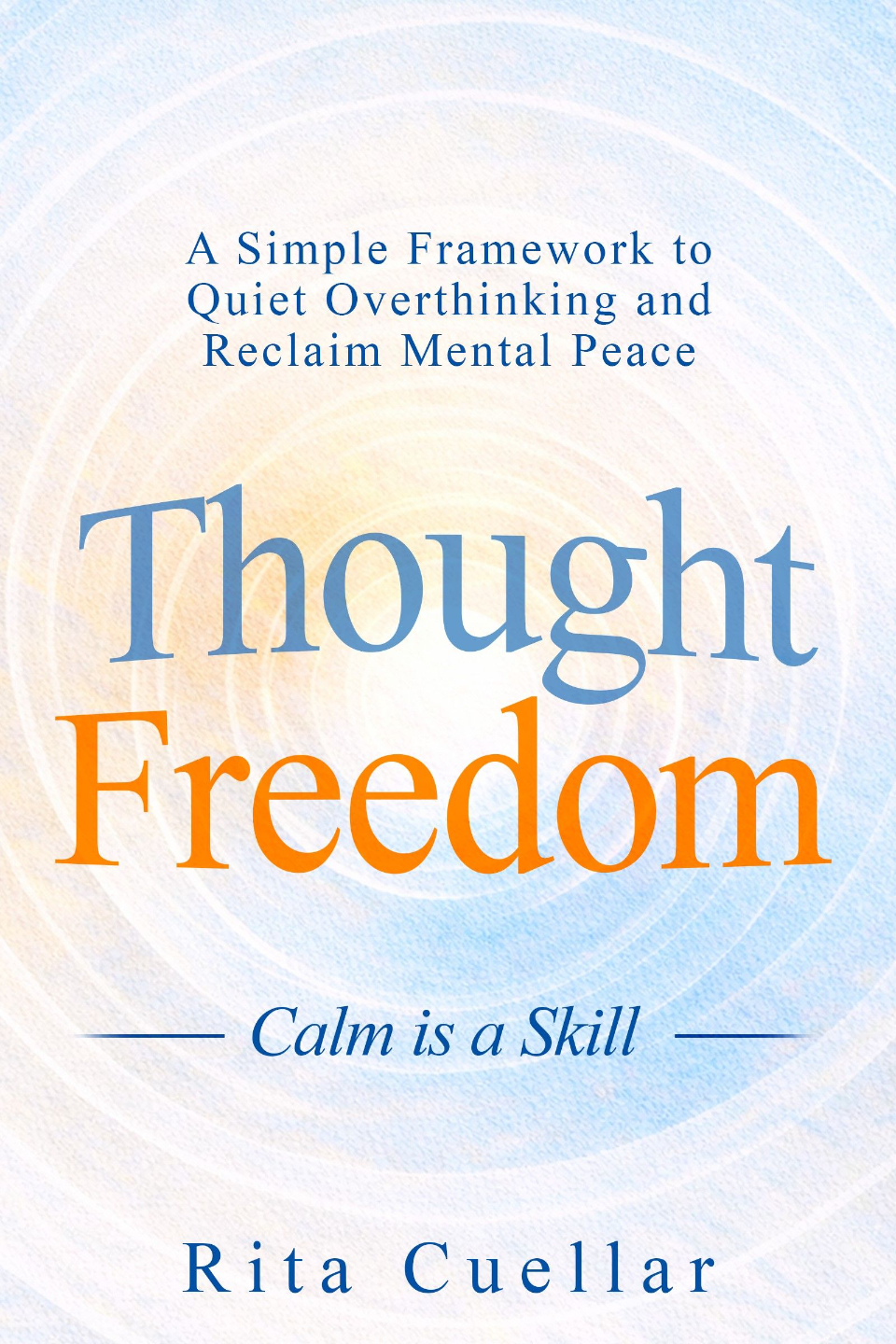
👉 The Thought Freedom Course helps you retrain how your mind responds to uncertainty so you can make decisions with confidence instead of fear.
If overthinking has been running in the background of your day, you don’t need more information—you need a way to interrupt the pattern.
The 7-Day Overthinking Reset gives you simple, daily steps to help you catch the loop, create space, and feel calmer—without trying to force your mind to be quiet.
Get Calm, Clear, and Out of Your Head
Simple tools and insights to help you break the overthinking loop—sent straight to your inbox.
Don't worry, your information will not be shared.
We hate SPAM. We will never sell your information, for any reason.