Why Your Brain Won’t Shut Off at Night (And How to Calm It Naturally)
Mar 23, 2026You finally get into bed. Your body feels tired, but your mind starts doing laps. It jumps from an awkward text to tomorrow's meeting, then to a random thing you forgot to buy.
If that sounds familiar, you're not broken or doing anything wrong. A racing mind at night is common, and it usually has clear triggers. Once you understand what keeps your brain alert, it gets easier to calm it without forcing anything.
There’s also a simple way to start calming this pattern quickly.
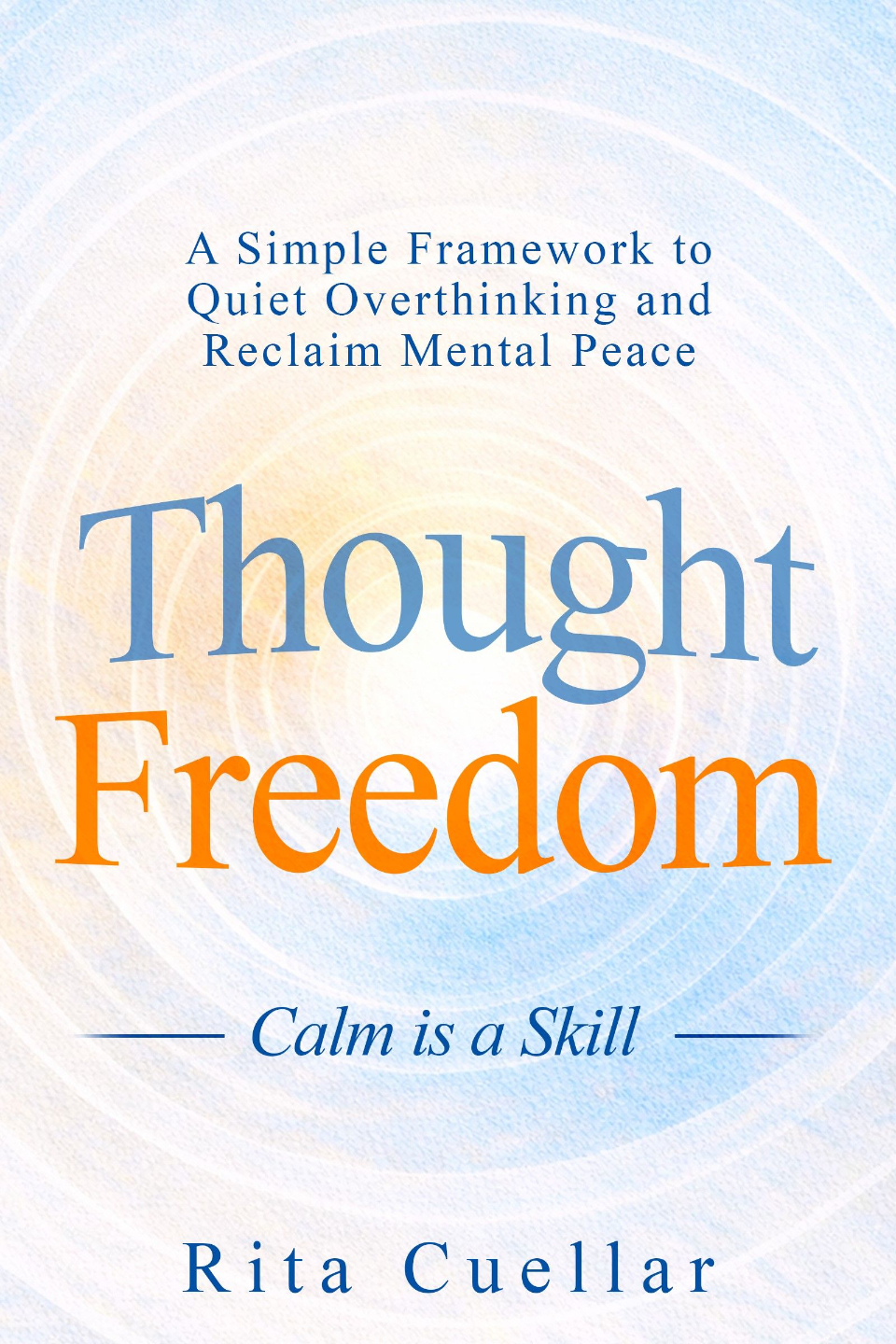
If your mind tends to stay “on” when you’re trying to rest, I created a short 7-day reset that walks you through how to interrupt the loop, calm your nervous system, and feel more settled—day by day.
👉 You can start the reset here
Why your brain gets louder right when the room gets quiet
At night, the outside world gets still. There's less noise, less motion, and fewer demands. So your inner world gets louder.
For some people, the brain stays in problem-solving mode when it should be shifting into rest mode. Sleep researchers often call this cognitive hyperarousal, which simply means your mind stays too alert for sleep. Reviews of insomnia research show this pattern again and again in people whose thoughts won't settle at bedtime, Sleep research often refers to this as “cognitive hyperarousal,” meaning the mind stays too alert for rest. Read more in this PubMed overview of hyperarousal in insomnia.
A busy mind at bedtime is often a nervous system issue, not a character flaw.
Stress, worry, and unfinished tasks keep the mind on high alert
Your brain thinks it's helping. It replays conversations to prevent future mistakes. It rehearses tomorrow so nothing gets missed. It scans for threats because stress taught it to stay watchful.
That's useful at 2 p.m. It's awful at 11 p.m.
Unfinished tasks make this worse. The more loose ends you carry into bed, the more your mind treats sleep like a bad time to clock out.
A delayed body clock can make bedtime feel too early for your brain
Your circadian rhythm is your inner clock. It helps time sleep, alertness, hunger, and body temperature. When that clock runs late, bedtime can feel like trying to sleep at sunset.
Recent research in late 2025 found that some people with chronic insomnia keep a more daytime-like level of mental alertness at night. Their thinking peaks later than expected, which weakens the brain's normal "power down" signal. So even when you're tired, your mind may not feel ready.
The hidden habits that quietly tell your brain to stay awake
Sometimes the problem isn't only stress. Daily habits can quietly push your brain toward alertness at the exact time you want calm.
Late caffeine can block the sleepy signals your brain needs
Adenosine is the chemical that helps create sleep pressure during the day. Think of it like gentle weight building behind your eyes. Caffeine blocks that signal.
That means coffee isn't the only issue. Energy drinks, pre-workout, strong tea, soda, and even chocolate can keep your mind sharper than you want. Research has found that caffeine can still disrupt sleep even when taken hours before bed, as shown in this study on caffeine timing and sleep.
If your brain gets loud at night, a lunchtime cutoff often works better than an evening gamble.
Screens, bright light, and nonstop input can keep your brain in daytime mode
Phones and TVs do two jobs at once. First, blue-rich light can delay melatonin, the hormone that helps your body prepare for sleep. Second, the content keeps your attention system switched on.
Even "relaxing" scrolling can be mentally sticky. Your brain is still tracking stories, faces, headlines, and tiny rewards. So the room may be dark, but your mind still feels like daytime.
How to calm a racing mind before bed, without trying too hard
These same tools are what you’ll start practicing inside the 7-Day Overthinking Reset.
The goal isn't to knock yourself out. It's to make your brain feel safe, bored, and done for the day.
Build a short wind-down routine that tells your brain the day is over
Keep it simple. A good wind-down routine lasts 30 to 60 minutes. Dim the lights. Put your phone away. Stretch a little. Wash your face. Read a paper book. Play soft music.
Most importantly, stop goal-based tasks 1 to 2 hours before bed when you can. If you're planning, fixing, comparing, or answering messages late, your brain may stay in work mode.

Use a brain dump, not your pillow, to hold tomorrow's thoughts
Your pillow is not a filing cabinet.
Before bed, write down what's circling in your head. Keep it short. List the worry, the task, and the next step. That's enough. Once the thought has a place to live, your brain doesn't have to keep rehearsing it.
This works because the mind often loops when it fears forgetting. A few lines on paper can lower that pressure fast.
Try slow breathing or body-based relaxation to lower mental speed
A fast mind often comes with a keyed-up body. So calming the body can help quiet the mind.
Try breathing in for four seconds and out for six. Or use box breathing, four in, four hold, four out, four hold. Progressive muscle relaxation helps too. Tighten one muscle group, then release it. Start at your feet and move up.
You don't need perfect focus. You just need a softer pace.
What to do if you're already in bed and your thoughts won't stop
Once frustration kicks in, sleep usually moves farther away. Pressure is gasoline for a racing mind.
Stop trying to force sleep, then switch to something quiet and boring
If you feel more irritated than sleepy, get out of bed for a bit. Keep the lights low. Read a paperback, fold laundry, or sit quietly until drowsiness returns.

That may sound backward, but sleep often shows up when effort drops.
Use simple mental anchors instead of arguing with every thought
Don't wrestle with each thought. That gives it more energy.
Instead, choose one neutral anchor. Count breaths. Repeat a plain word like "soft." Picture a calm place. Notice five quiet sensations, like the sheet on your hand or the cool air in the room. When your mind wanders, gently return. That gentle return is the practice.
When a busy brain at night may be a sign to get extra help
If this happens often, lasts for weeks, or comes with anxiety, depression, panic, loud snoring, or heavy daytime exhaustion, talk with a doctor or sleep specialist.
A proven treatment called CBT-I helps many people change the thoughts and habits that keep insomnia going. The Veterans Affairs guide to CBT-I explains how it works in plain language.
A racing mind at night is common, understandable, and changeable. Stress, body clock timing, screens, and caffeine often keep the brain alert long past bedtime. Still, small steps help: dim the lights, cut late caffeine, write tomorrow down, and use slow breathing when your mind speeds up. You don't need a perfect routine, just a few steady habits that help your brain feel safe enough to rest.
If your mind tends to stay active at night, you don’t have to keep trying to manage it on your own.
The 7-Day Overthinking Reset will walk you step-by-step through how to interrupt the loop, calm your mind, and respond differently.
If overthinking has been running in the background of your day, you don’t need more information—you need a way to interrupt the pattern.
The 7-Day Overthinking Reset gives you simple, daily steps to help you catch the loop, create space, and feel calmer—without trying to force your mind to be quiet.
Get Calm, Clear, and Out of Your Head
Simple tools and insights to help you break the overthinking loop—sent straight to your inbox.
Don't worry, your information will not be shared.
We hate SPAM. We will never sell your information, for any reason.