The Hidden Anxiety of Waiting for Bad News (And How to Calm the Spiral)
May 02, 2026You can be folding laundry, answering emails, or driving to work, and still feel like your whole body is bracing for impact. A text hasn't come back. A test result is pending. Something feels unsettled, and your mind won't let it go.
For many high-functioning midlife women, this kind of future-focused anxiety stays hidden in plain sight. You keep going, but sleep gets lighter, patience gets thinner, and ordinary days start to feel heavier than they should.
What this hidden anxiety really is
This feeling has a name: anticipatory anxiety. It means your mind and body are reacting to something that might happen, even if nothing is wrong right now. The threat lives in the future, but your nervous system acts as if it's already here.

A little caution is normal. If you're waiting for biopsy results or a hard conversation, some worry makes sense. The problem starts when that worry becomes a loop. You replay the same fear, scan for signs of danger, and can't settle even when there is no new information.
That loop can be hard to spot because it often looks like responsibility. You tell yourself you're preparing. You say you're staying alert. Yet inside, you're stuck in dread. As the APA's overview of anticipatory anxiety explains, this pattern often shows up around life transitions and uncertain events.
Current US data adds context. Anxiety disorders affect about 19.1% of adults in a given year, and women are about twice as likely as men to develop them. Midlife women carry added strain because hormones, caregiving, health concerns, and career pressure can all rise at once.
If this pattern feels familiar, I put together a simple Thought Freedom Starter Kit to help you calm the spiral.
Get it here: Starter Kit
Why anticipatory anxiety feels so intense
Your brain does not always wait for proof. When a "what if" thought shows up, the body may respond as if danger is present now. Heart rate rises. Muscles tighten. Breathing gets shallow. Sleep becomes harder.
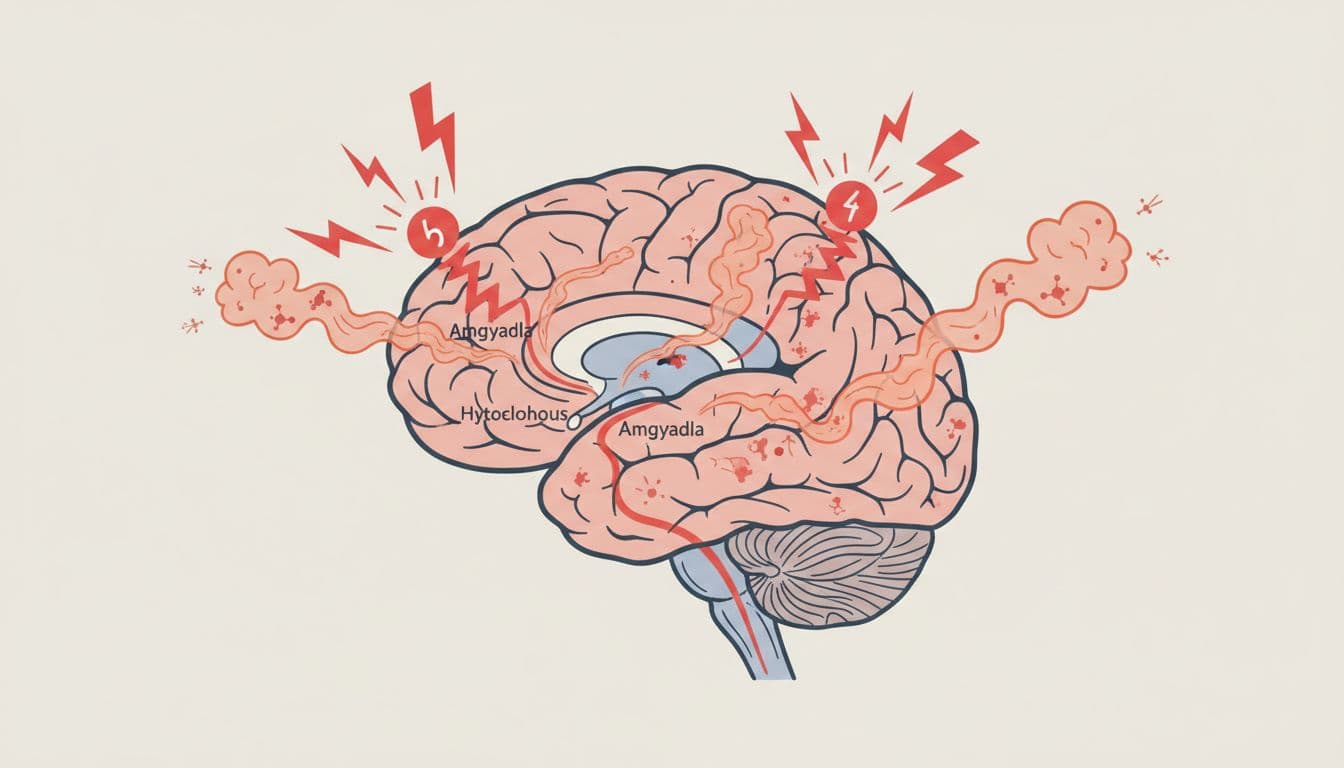
This is the fight-or-flight response in plain terms. It is your built-in alarm system. That system is helpful in an emergency. It is exhausting when the emergency is only a possibility.
Waiting can feel worse than the event itself because there is no clear ending for the mind to hold onto.
That is why a pending call or a vague symptom can hijack a whole day. You may know you're probably safe, but your body doesn't feel safe yet.
If your mind tends to jump ahead like this, you may also relate to why your brain creates problems that don’t exist.
How catastrophizing turns worry into panic
Catastrophizing is when the mind jumps from a small concern to the worst possible outcome. A late reply becomes rejection. A follow-up scan becomes bad news. A mistake at work becomes career ruin.
This doesn't mean you're dramatic or weak. It means your brain is trying to outrun uncertainty—but it does it with fear. The blanks usually get filled with fear.
The Cleveland Clinic's explanation of catastrophizing describes how fast this snowball can build. One thought leads to another, and soon you're reacting to a full story that has not happened. In midlife, when you already have more people and problems to think about, that story can grow fast.
This is also why many women struggle with second-guessing decisions long after they’ve made them.
The everyday situations that can set it off
Anticipatory anxiety rarely announces itself in a big way. More often, it starts in ordinary moments. That is why it can be so easy to miss.
- A school call from an adult child
- A note from HR, a weird symptom at 2 a.m.
- A tense dinner with your partner
- A parent who stops answering the phone
These are familiar situations. On the outside, life still looks normal. Inside, your thoughts may be running laps.
Health appointments, screenings, and test results
Few things stir up dread like waiting on your health. Mammograms, blood work, colonoscopy prep, blood pressure checks, follow-up imaging, all of it can wake up old fears. Even routine care can feel loaded when you don't yet know the outcome.

The mind hates silence. If there is a gap between the appointment and the answer, it often fills that gap with worst-case stories. You may find yourself checking the portal too often, searching symptoms, or reading your provider's tone for clues.
Some support helps. MedlinePlus offers practical ways to cope with medical test anxiety, including asking what the test is for, what the timeline is, and what you can expect. Clear facts calm the spiral better than endless guessing.
If you’ve been feeling physically drained along with this, you might also relate to why you feel tired even after sleeping.
Family, work, and relationship uncertainty
Many women in midlife carry several emotional jobs at once. You may worry about your kids, your parents, your partner, your boss, and your own health before noon. That load makes uncertainty harder to tolerate.
A child who seems withdrawn can set off fear about mental health, money, or safety. A parent who forgets something simple may spark worries about decline. A change at work can stir fears about income, identity, or being replaced. If a relationship feels strained, the mind may start rehearsing loss before anything has been said.
In these moments, uncertainty often hurts more than the event itself. The mind wants closure. When it can't get closure, it creates a story.
Life changes that shake your sense of control
Midlife often brings change on several fronts at once. Hormones shift. Bodies feel different. Career goals may change. Some women become empty nesters while also caring for aging parents. Others are dealing with divorce, debt, grief, or a house that suddenly feels too big or too small.
That stack of change matters. Research summarized in Johns Hopkins' guide to perimenopause and anxiety notes that anxiety can rise during perimenopause and menopause. Faster heartbeat, sleep disruption, trouble focusing, and digestive issues can all feed the sense that something is off.
When life already feels less predictable, waiting gets harder. Your brain wants control, and waiting gives you none.
What this kind of worry does to your body and daily life
This is not "just overthinking." Repeated dread can wear down the body and shrink daily life. The effects may be subtle at first, but they add up.
The physical signs people often ignore
Many women explain these symptoms away as stress, age, hormones, or being too busy:
- trouble falling asleep or waking too early
- tight shoulders, jaw clenching, or headaches
- stomach upset or a jumpy appetite
- irritability and a short fuse
- brain fog and trouble focusing
- a racing heart or chest tightness
Each symptom can seem minor on its own. Put together, they form a pattern. If you keep waiting for something to go wrong, your body may stay on alert long after the moment has passed.
This is exactly the kind of loop I walk you through inside the free Thought Freedom Starter Kit—so you can interrupt it early instead of getting pulled in.
How it can lead to avoidance, burnout, and more fear
Anticipatory anxiety often changes behavior. You may delay the appointment you dread. You may overprepare for a meeting, rewrite the same email six times, or cancel plans because you feel too drained to show up.
Those choices make sense in the short term because they reduce fear for a moment. However, they also teach the brain that the threat was too big to face. Over time, the fear grows. Life gets smaller. The next waiting period feels even worse.
Burnout can slip in here too. You still perform. You still care for everyone. Yet your inner life is built around bracing.
Why high-functioning women may miss the warning signs
If you're capable, dependable, and used to holding things together, anxiety can hide behind competence. People may praise how calm you seem. Meanwhile, your mind is running emergency drills all day.
Perfectionism adds fuel. So does caregiving. So does the pressure to be the stable one in the room. When you are used to meeting everyone's needs, your own distress gets pushed to the back.
That is why this pattern often stays hidden for years. You keep functioning, so no one sees the cost.
Ways to calm the spiral before it takes over
Relief usually starts small. You do not need a perfect mindset. You need a few steady habits that interrupt the fear loop before it gathers speed.
Catch the thought before it becomes a story
The first step is simple and hard at the same time: notice the first scary thought. Not the tenth one. The first one.

Then ask, "What do I know for sure?" Write down the facts. After that, ask, "What else could be true?" This creates space between the event and the story your mind built around it.
You do not need to force positive thoughts. You only need to be fair with the evidence.
Use small grounding habits that tell your body you are safe
When the body is alarmed, logic alone may not help. Start with the body.

Take three slow breaths with a longer exhale. Step outside for a ten-minute walk. Put your phone in another room. Name five things you can see. These are small actions, but they send a clear message to your nervous system: there is no emergency right this second.
Do this early, before the spiral takes over.
Prepare without feeding the fear
Practical planning helps. Doom spiraling does not. There is a difference.
You can gather the papers for the appointment, write down questions, or decide who to call if you need support. That is preparation. Rechecking the portal every 20 minutes, reading worst-case forums at midnight, and rehearsing disaster are fear rituals. They feel useful, but they keep the alarm switched on.
A simple rule helps: prepare once, then pause.
Know when support from a therapist can help
If this pattern keeps coming back, therapy can help a lot. Cognitive behavioral therapy, or CBT, is often used to treat anticipatory anxiety because it helps you catch distorted thoughts, test them, and respond in a steadier way.
The CBT tools described here show how tracking a worry, rating how much you believe it, and checking it against real evidence can soften the cycle. Support also helps when anxiety starts to affect sleep, work, health care, or relationships.
Getting help is not a sign that you can't cope. It is a sign that you are tired of carrying fear by yourself.
Conclusion
If your mind keeps bracing for something to go wrong—
I created a simple Thought Freedom Starter Kit to help you reset that pattern.
It walks you through how to:
• Interrupt the stress loop
• Catch what’s triggering it
• Start feeling calmer and more in control
Get it here: Starter Kit
You do not need to become fearless.
You only need to stop living as if bad news is always on its way.
If overthinking has been running in the background of your day, you don’t need more information—you need a way to interrupt the pattern.
The 7-Day Overthinking Reset gives you simple, daily steps to help you catch the loop, create space, and feel calmer—without trying to force your mind to be quiet.
Get Calm, Clear, and Out of Your Head
Simple tools and insights to help you break the overthinking loop—sent straight to your inbox.
Don't worry, your information will not be shared.
We hate SPAM. We will never sell your information, for any reason.