Why You Feel Fine One Moment and Overwhelmed the Next in Midlife
Apr 10, 2026You can look calm, answer emails, make dinner, and keep the house moving, then suddenly feel like one more sound or request will break you. That fast shift can feel embarrassing, confusing, and out of character.
Most of the time, it isn't random. Sudden overwhelm usually means small pressures have been stacking up quietly until your brain and body hit a limit. Once you see that pattern, the shame starts to lift, and the whole experience makes more sense.
What sudden overwhelm really is, and why it can feel so confusing
Overwhelm is a stress response. It is not a character flaw, and it does not mean you're weak. In plain terms, it happens when the demands on you rise above what your mind and body can handle in that moment.
That is why it can seem to come out of nowhere. You may have been coping, masking, or running on habit for hours, days, or even months. Then one more thing arrives: a text, a loud room, a missing permission slip, and the whole system tips.
Your brain and body can hide stress until they can't anymore
Stress does not always announce itself clearly. Sometimes it builds in the background like browser tabs left open all day. Each tab looks small on its own, but together they slow everything down.
Mental load plays a big part here. So do decision fatigue, constant noise, emotional strain, poor sleep, and the effort of keeping everyone else okay. Over time, that constant load can leave you feeling mentally exhausted even when you haven’t done anything extreme.
Why You Feel Mentally Exhausted All the Time
You may not feel panicked as you move through the day. You're still functioning, so your mind assumes you're fine.
Then a small trigger lands. Suddenly, you're crying in the car, snapping at your partner, going blank in the grocery store, or wanting to shut the bathroom door and disappear for ten minutes. The trigger looks small, but it wasn't the whole cause. It was the last straw.
Sudden overwhelm is often a delayed stress response, not proof that you're failing.
When this keeps happening, it’s easy to think something is wrong with you.
But what’s actually happening is a pattern your mind and body have fallen into—and it can be interrupted.
If you want a simple way to start calming that response and breaking the cycle, the 7-Day Overthinking Reset walks you through it step by step.
This is often the same pattern that shows up later at night when your mind won’t slow down.
Why You Overthink at Night
Looking okay on the outside does not mean you feel okay inside
This is also why many women start to feel disconnected from themselves without fully understanding why.
Why You Feel Disconnected From Yourself
Many high-functioning women are skilled at staying productive through stress. They show up, keep plans, remember details, and keep pushing. From the outside, that can look like strength. Inside, it may feel like tight control held together with a thread.
Masking often shows up as people-pleasing, perfectionism, or being the reliable one, no matter what. Those habits can work for years, until they don't. When your usual coping style starts to crack, the shift feels alarming. Yet it often fits what clinicians call high-functioning burnout in driven women, where performance stays high even while inner reserves run low.
The hidden reasons your stress tolerance changes so fast in midlife
Midlife adds pressures that are easy to underestimate. Hormone shifts, sleep loss, caregiving, work strain, and years of accumulated stress can all lower your buffer. So, a task that felt easy three years ago may now feel like too much on a hard day.
Recent 2026 reporting and research point to the same pattern. Mood changes, fatigue, irritability, and sleep problems are among the most common midlife complaints, often even more than hot flashes. That matters because many women still don't connect these symptoms to perimenopause or long-term stress load.
Perimenopause can lower your buffer without warning
Perimenopause is not only about skipped periods or hot flashes. Changing estrogen can affect mood, memory, sleep, and patience. That means your emotional margin for error may shrink before you realize what's happening.

For some women, the first signs are irritability, anxiety, brain fog, or sudden tears. Normal tasks can start to feel harder, louder, and less manageable. You may think, "Why can't I handle this anymore?" when the real answer is that your nervous system is working with less cushion. If you want a clear medical overview, Northwell's perimenopause FAQ explains how wide the symptom range can be.
Poor sleep makes everyday stress feel much bigger
Sleep loss changes everything. When sleep gets lighter or more broken, focus drops, patience thins out, and small frustrations hit harder. Even one bad night can make a normal day feel sharp around the edges.
In midlife, sleep problems often stem from both stress and hormonal changes. Many women wake at 3 a.m., feel tired but wired, then drag through the morning and crash later. After a few nights like that, your brain has less room for noise, clutter, delays, or conflict.

Current women's mental health reporting also links menopausal sleep disruption with lower quality of life, anxiety, and mood strain. The MGH Center for Women's Mental Health on menopausal sleep disturbance puts that connection in plain language.
Blood sugar dips, caffeine, and skipped meals can add fuel to the fire
Sometimes the body is asking for something basic. Long gaps without food, too much coffee, stress eating, or a quick sugar crash can leave you shaky, foggy, or irritable. Then your thoughts get darker, and your patience gets shorter.
This is only one piece of the puzzle. Still, it matters. If you've ever felt calm at 11 a.m. and suddenly frantic at 1 p.m., with no clear reason, food and caffeine may be part of the story.
Why high-functioning women often miss the signs until they hit a wall
Capable women often don't notice rising overload because they've trained themselves to keep going. They solve problems quickly, take on extra tasks, and put their own distress at the bottom of the list.
That works, until it doesn't. Midlife often exposes the cost of that pattern because the total load gets heavier while your recovery time gets shorter.
You may be carrying too much for too long
Many women in this stage of life are holding multiple roles at once. There may be career pressure, aging parents, teens or adult kids, marriage strain, health worries, money concerns, and the endless household details no one sees.
The pressure is not only about what you do. It is also about what you track. Appointments, emotions, birthdays, forms, medications, grocery gaps, school issues, family tension, and future planning all take up space. Recent coverage in Psychology Today's midlife overwhelm article points to the same issue, especially the invisible labor many midlife women carry every day.
Old coping habits can stop working in this season of life
Pushing through may have served you for decades. Staying busy may have helped you avoid feelings. Over-giving may have kept the peace. Trying to do everything well may have made you feel safe.
But old coping styles can fail when the load rises and your internal buffer drops. That is one reason midlife can feel like a rude awakening. Women who have always managed well may suddenly feel raw, scattered, or unusually sensitive.
For some, neurodivergent traits also become more visible now. ADHD or autism traits that were once masked by structure, effort, or youth can stand out more when hormones shift and stress piles up. The result can look like "sudden" overwhelm, even though the strain has been there for a long time.
How to tell when a sudden crash is your body asking for help
A full crash rarely starts with the crash. Most of the time, your system sends warning signs first. The problem is that they are easy to dismiss.
The early signs are often easy to brush off
Maybe you snap faster than usual. Maybe simple choices feel weirdly hard. Noise feels bigger, clutter feels hostile, and easy words disappear mid-sentence. You may want to cancel plans, hide in the bathroom, or zone out after being around people.
Those are not moral failings. They are warning lights. Your body may also show it through jaw tension, shallow breathing, stomach upset, headaches, or that buzzy feeling that says, "I need everyone to stop talking right now."
A simple way to track your own pattern
You do not need a perfect journal. A short one-week log in your notes app is enough. Write down when overwhelm hits, how you slept, when you last ate, where you are in your cycle if you still have one, and whether the setting felt noisy, crowded, or emotionally loaded.

Patterns often show up fast. You may notice that the roughest moments happen after three poor nights, on high-conflict days, after skipped meals, or during certain points in your cycle. Awareness is the goal here, not perfection.
What helps when you feel overwhelmed all of a sudden
When the wave hits, the first job is not to power through harder. It is to lower the load on your nervous system.
What to do in the moment so your system can settle
Step away if you can. Reduce noise. Put down one task before picking up another. Drink water. Eat something steady, especially if you've had coffee and no real meal. If possible, tell someone you need ten quiet minutes.
Then narrow the field. Do the next small thing, not all the things. That might mean sitting in the car before going inside, turning off a podcast, folding one towel instead of cleaning the whole room, or texting, "I need a pause." These are not quick fixes. They are ways to cut input and add a sense of safety.
When to get extra support instead of only pushing through
If these crashes are getting more common, more intense, or harder to recover from, it may be time for support. The same goes if overwhelm is hurting work, sleep, relationships, or your sense of self.
A good next step may be talking with a doctor, therapist, or both. Bring real examples. Mention anxiety, low mood, panic, poor sleep, cycle shifts, brain fog, sensory overload, or concern about ADHD if that fits. You can also ask directly about perimenopause. The point is to match support to the actual cause, not to dismiss yourself as "too sensitive."
If you feel fine one moment and overwhelmed the next, your body is probably telling you your buffer is low. It is not telling you that you're broken.
Midlife has a way of exposing hidden strain, especially when hormone shifts, poor sleep, and years of carrying too much all meet at once. When you get curious about your patterns, the picture often becomes clear, and the shame starts to loosen.
The shift may feel sudden. Most of the time, the message has been building for a while.
If you feel fine one moment and overwhelmed the next…
It doesn’t mean you’re too sensitive or losing control.
It usually means your system has been under more pressure than it can carry.
The good news is—you can learn how to stabilize it.
Start with the 7-Day Overthinking Reset, where you’ll learn how to:
- Calm your nervous system in real time
- Interrupt emotional overwhelm before it escalates
- Feel more steady, clear, and in control
Want to go deeper?
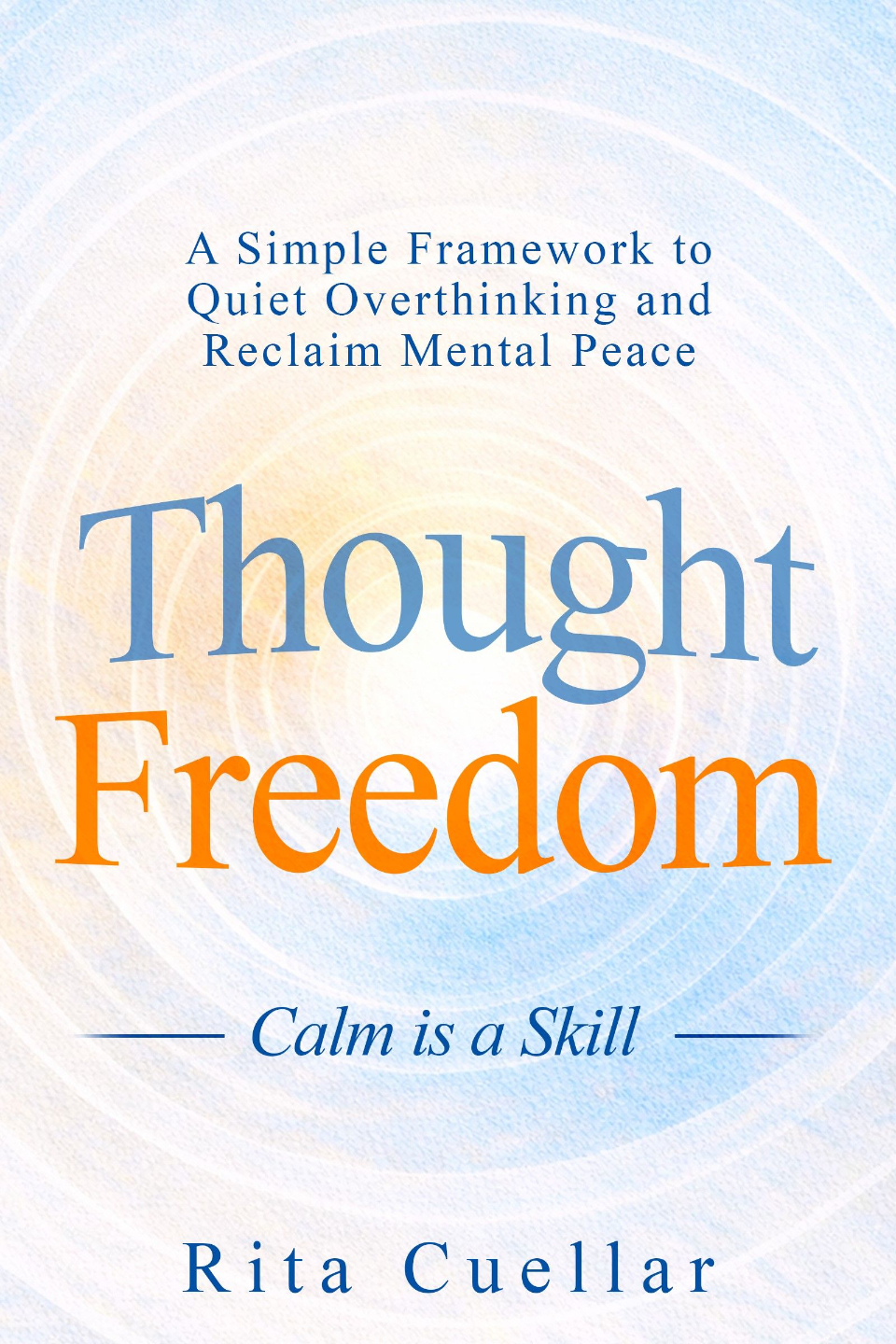
The Thought Freedom Course shows you how to break the cycle of overthinking and emotional overwhelm so you can move through your days feeling calm, confident, and grounded.
If overthinking has been running in the background of your day, you don’t need more information—you need a way to interrupt the pattern.
The 7-Day Overthinking Reset gives you simple, daily steps to help you catch the loop, create space, and feel calmer—without trying to force your mind to be quiet.
Get Calm, Clear, and Out of Your Head
Simple tools and insights to help you break the overthinking loop—sent straight to your inbox.
Don't worry, your information will not be shared.
We hate SPAM. We will never sell your information, for any reason.